
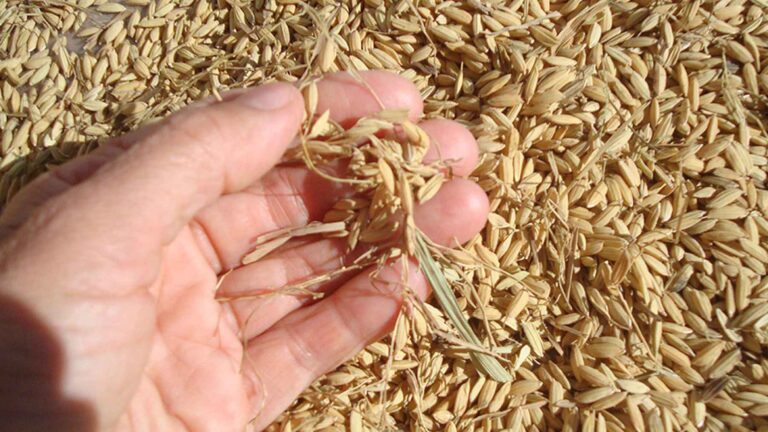
Rice husk, long treated as agricultural waste after harvests, may soon play a major role in electricity generation, especially in rural communities with weak power supply.
Researchers in Colombia discovered that rice husk performs far better than some other farm residues in biomass power reactors used for generating electricity.
Unlike coffee husk, which forms large hard clogs during combustion, rice husk leaves only tiny deposits, helping reactors run more smoothly and efficiently.
The study found that rice husk contains high levels of silica, making it more compatible with the sand used inside fluidized-bed combustion systems, a common technology for converting biomass into electricity. Because of this property, rice husk reduces the buildup of sticky ash that can block airflow and shut down power systems.
In laboratory tests conducted at temperatures of about 900°C, rice husk produced only minimal crust-like deposits compared to coffee husk, which created large rock-like clumps capable of disrupting reactor operations.
Experts say this could make rice husk a more reliable and cleaner fuel source for small-scale electricity generation, particularly in rural areas where access to stable power remains a challenge.
Colombia alone reportedly generates about 6.3 million metric tons of rice residues annually, showing the huge energy potential hidden in agricultural waste that is often discarded.
Researchers believe rice husk-powered biomass systems could support electricity supply for schools, clinics, homes and small businesses, while also reducing dependence on diesel generators.
However, they noted that successful deployment would still require proper engineering, pollution control, investment and integration with other renewable energy sources such as solar and battery storage systems.
Tags: Rice Husk, Electricity Generation, Biomass Energy, Renewable Energy, Agricultural Waste, Rural Electrification, Clean Energy, Sustainable Energy, Power Generation, Green Energy, Alternative Energy, Farm Waste, Energy Innovation.