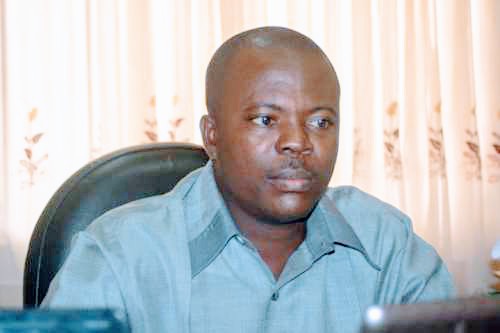
By David Onwuchekwa
Over some years now, the South East of Nigeria has been in battle over a troubling phenomenon that continues to paralyze daily life: the sit-at-home order.
It began as a political statement by the Indigenous People of Biafra (IPOB) but has eventually evolved into something far more complex and dangerous than ever envisaged.
At the beginning, the sit-at-home was a form of protest meant to demand the release of Nnamdi Kanu, the IPOB leader who was arrested and detained ( still in detention) by the Nigerian government.
Ordinarily, it was a peaceful way to express deep-seated grievances, among the Biafra agitators, the longstanding sense of marginalization felt by many in the Igbo-speaking South East.
Nonetheless, what was once symbolic resistance has spiraled into a chronic disruption of life. Despite IPOB’s eventual suspension of the directive, splinter groups acting for whatever interest continue to enforce it with violence and threats.
In some communities, people have been attacked or even killed for attempting to go about their normal activities. Fear has replaced choice.
The impacts, consequently, are staggering. Each Monday or any other day dictated by these shadowy enforcers streets are empty, markets closed, schools shut down, and hospitals scale back operations. Children lose vital classroom time. Daily wage earners are denied their livelihoods. Small businesses suffer devastating losses. The region’s economy bleeds.
To make matters worse, the security vacuum has emboldened criminal elements, who now exploit the crisis for their own ends. Violence is no longer just political, it’s opportunistic.
At the heart of the matter is a failure of governance. The State appears incapacitated or unwilling to assert control, and the people are caught in the middle, forced to choose between personal safety and basic survival. What began as a plea for justice has turned into an unjust reality for millions.
If the sit-at-home continues unchecked, it risks hollowing out the South East economically, educationally, and socially. What the region needs now is more than political rhetoric. It needs leadership, dialogue, and above all, a return to law and order.
Until then, Mondays in the South East will remain a symbol not of protest, but of paralysis while the region continues to lose billions of naira for unnecessarily staying at home.
One of the major options is for the South Eastern Governors to unite and fight hard for the release of Nnamdi Kanu. The joint action must start now.