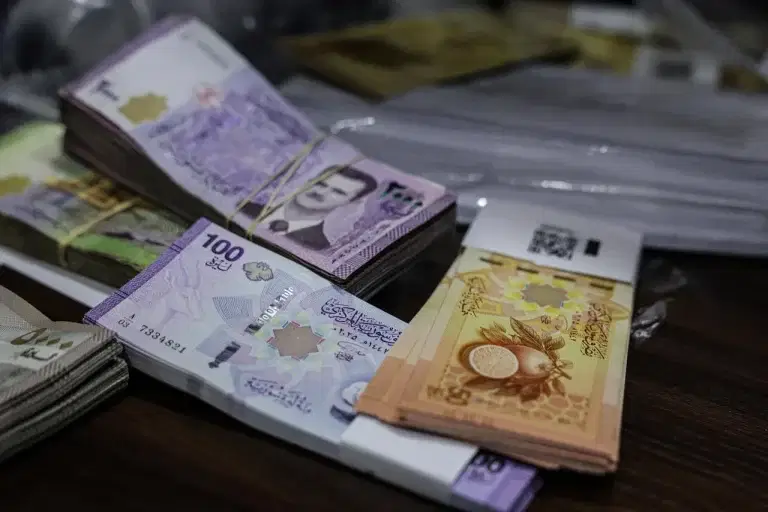
Several countries have changed, replaced, or redenominated their national currencies in recent years as part of efforts to simplify financial transactions, address economic challenges, and strengthen their monetary systems.
Currency reforms often affect businesses, consumers, investors, and travelers, especially when old banknotes are withdrawn or large denominations are eliminated.
The five countries, according to Vanguard reports, that recently changed their currencies include:
1. Syria
Syria introduced a new version of the Syrian pound on January 1, 2026, removing two zeros from the currency. Under the reform, 100 old Syrian pounds became one new pound. The redesigned banknotes feature images highlighting the country’s agricultural and cultural heritage, replacing symbols associated with the former government.
2. Bulgaria
Bulgaria officially adopted the euro in January 2026, replacing the Bulgarian lev after becoming the 21st member of the eurozone. The conversion rate was fixed at €1 to 1.95583 Bulgarian lev, allowing businesses and consumers to conduct transactions in euros and facilitating easier trade and travel within the euro area.
3. Zimbabwe
In April 2024, Zimbabwe introduced the Zimbabwe Gold (ZiG), replacing the Zimbabwe dollar. The new currency is backed by a reserve basket comprising foreign currency assets and precious metals, including gold. The reform was aimed at restoring confidence and improving monetary stability following years of economic turmoil.
4. Venezuela
Venezuela launched the digital bolívar in October 2021, removing six zeros from its previous currency. Under the redenomination, one new bolívar became equivalent to one million old bolívars. The move was intended to simplify transactions after prolonged hyperinflation.
5. Sierra Leone
Sierra Leone redenominated its currency, the leone, in 2022 by removing three zeros. One new leone became equal to 1,000 old leones. The government said the reform was designed to simplify accounting, pricing, and everyday financial transactions, without changing the actual value of people’s money.
Analysts note that while currency redenomination or replacement can make transactions easier and improve confidence in a country’s monetary system, such reforms are most effective when supported by sound economic policies that address inflation and fiscal stability.
Tags: Economy, Currency Reform, Global Finance