
By Chinedum Treasure
The National Association of Persons with Physical Disabilities (NAPWPD) has called on media organisations in Nigeria’s South-East to play a more active role in promoting disability rights and exposing accessibility gaps across the region.
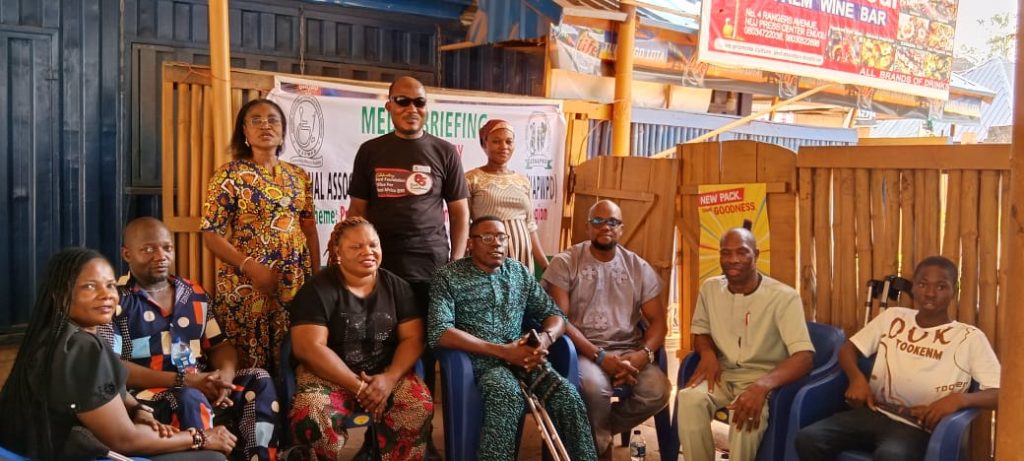
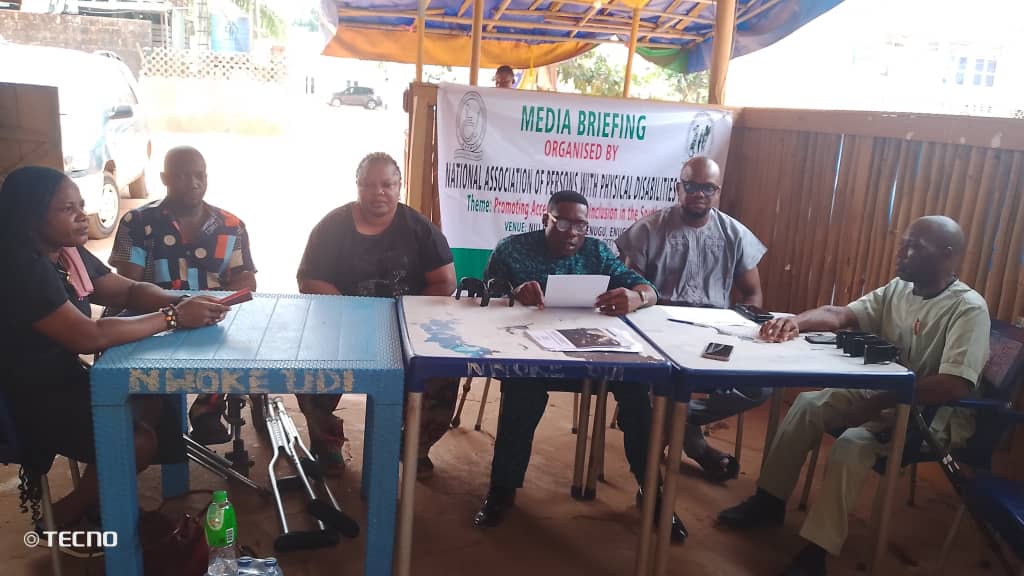
President of the association, Comrade Rilwan Mohammed, made the call during a press briefing in Enugu, held in collaboration with the Joint National Association of Persons with Disabilities (JONAPWD). He noted that the media has the capacity to bring attention to issues affecting persons with disabilities that often go unnoticed.
Represented by the Team Lead of the NAPWPD South-East Advocacy Group, Comrade Ugochukwu Okeke, Mohammed explained that accessibility is not a privilege but a fundamental requirement for inclusion and equal participation in society.
He identified key challenges facing persons with disabilities in the region, including poor access to public buildings, transportation systems, and weak enforcement of existing disability laws.
Describing the media as a critical partner in advancing inclusion, Okeke urged journalists to increase coverage of disability-related issues and support efforts to ensure compliance with accessibility standards.
He recommended that media organisations highlight stories of persons with disabilities, conduct periodic assessments of public institutions to determine compliance with disability laws, and educate the public on the importance of accessibility.
Okeke also encouraged inclusive programming through the use of sign language interpretation, accessible communication formats, and active participation of persons with disabilities in media discussions.
According to him, accessibility benefits not only persons with disabilities but also other vulnerable groups, including the elderly, pregnant women, and injured individuals.
He expressed optimism that with increased awareness, stronger partnerships, and sustained media engagement, the South-East region could become a model for disability inclusion in Nigeria.
Reaffirming the association’s commitment to collaboration with government, private sector stakeholders, civil society organisations, and the media, Okeke emphasized that disability rights are fundamental human rights.
He added that prioritising accessibility would foster a more inclusive, equitable, and humane society, urging all stakeholders to work collectively towards ensuring that no one is left behind.


