From The Nijasun News Desk
The gathering of military officers, academics, security experts and community leaders in Nnewi, Anambra State, for the 6th Sam Momah Annual Lecture Series (SMALS6) was more than a tribute to the late General Sam Momah.
It was a sober reflection on Nigeria’s worsening security situation and a passionate call for a comprehensive national response that extends far beyond the battlefield.
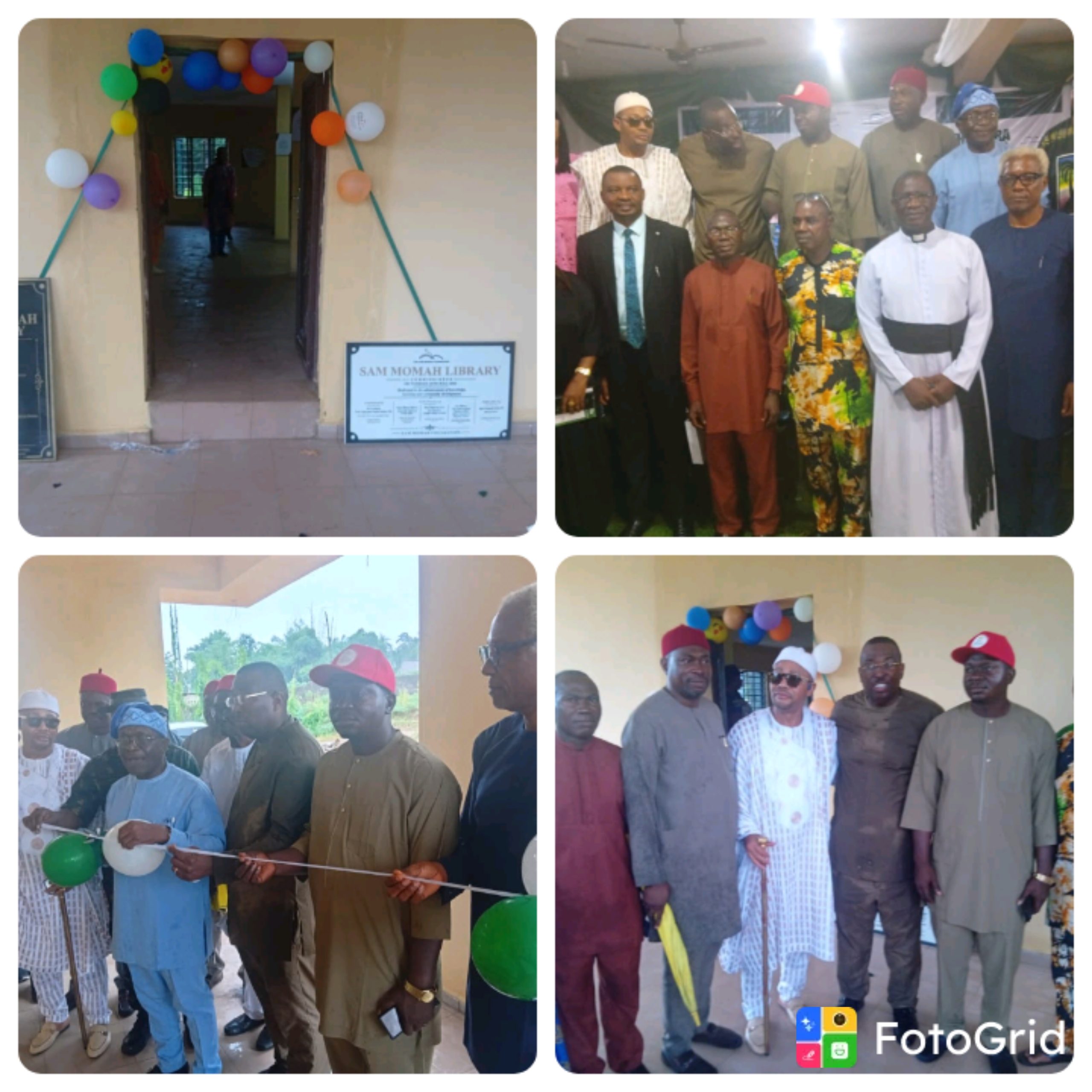
At the event, which also featured the commissioning of the fifth library built by the Sam Momah Foundation in Nigeria, speakers agreed that defeating insecurity requires more than military operations.
They argued that political leadership, effective policing, intelligence gathering, justice sector reforms, economic empowerment and community participation must work together to restore peace and stability.
Delivering the keynote lecture, retired United States Army Colonel, Iraq War veteran and military strategist, Col. Chukwuemeka Olunkwa, drew from his extensive combat experience in Iraq and Afghanistan to explain why military force alone cannot win the battle against terrorism, banditry and organised crime.
Describing his presentation as a criminological analysis rather than a military briefing, Olunkwa said Nigeria’s security crisis has grown into a complex ecosystem where terrorism, kidnapping, organised crime and economic desperation reinforce one another.
According to him, military operations account for only a small portion of what is required to overcome insecurity.
He argued that while military action contributes about seven per cent to resolving security challenges, political leadership contributes approximately 43 per cent, with policing and intelligence making up another 40 per cent.
This, he said, demonstrates that the greatest responsibility lies with political leaders and institutions rather than soldiers alone.
Drawing comparisons with multinational operations in Iraq, where he served as a Liaison Training Officer with the Iraqi Ground Force Command Headquarters, Olunkwa said successful counter-insurgency campaigns were built on community trust, credible governance, intelligence sharing and economic opportunities rather than military firepower alone.
He lamented that kidnapping has become a lucrative criminal enterprise, alleging that ransom payments now generate enormous financial returns for criminal groups, while prosecution rates remain alarmingly low.
According to him, the nation has witnessed tens of thousands of conflict-related deaths and millions of internally displaced persons, underscoring the urgency for a coordinated national response.
For Olunkwa, Nigeria’s greatest weapon against insecurity is not merely stronger weapons but stronger institutions.
He maintained that disciplined security leadership, intelligence fusion, judicial credibility, economic protection and community legitimacy are the pillars upon which lasting peace must be built.
He further challenged political leaders to invest more in youth empowerment and community development, insisting that reducing poverty, unemployment and social exclusion would significantly weaken the recruitment base of criminal organisations and insurgent groups.
Representing the General Officer Commanding (GOC) 82 Division, Nigerian Army, Enugu, Major General Oluremi A. Fadairo, Brigadier General Solomon Julius reinforced the military’s commitment to collaboration with civil authorities and local communities.
He explained that education remains one of the most powerful instruments for national security, noting that informed citizens are better equipped to resist criminal influence and contribute positively to nation-building.
Commending the Sam Momah Foundation for expanding educational opportunities through library projects across Nigeria, he described the initiative as a practical investment in national development.
According to him, the Nigerian Army continues to promote synergy among government, citizens and security agencies because sustainable security can only be achieved through collective responsibility.
Adding another dimension to the conversation, the pioneer Director-General of the National Orientation Agency (NOA), Prof. Elochukwu Amucheazi, expressed concern over what he described as the failure of Nigeria’s political leadership to confront the country’s security realities.
He accused sections of the political class of contributing to the nation’s insecurity through poor leadership and lack of commitment to national interest.
According to the elder statesman, many political actors remain insulated from the hardships faced by ordinary Nigerians because they enjoy extensive security protection, making them less sensitive to the daily realities confronting citizens.
He therefore called for a complete reorientation of Nigeria’s political leadership, insisting that genuine commitment to national development and responsible governance must replace self-interest and indifference.
Beyond the security conversations, the commissioning of another modern library by the Sam Momah Foundation reflected the enduring legacy of the late General Sam Momah, a soldier, statesman and intellectual who believed that education remains one of the strongest foundations for national progress.
His family, led by Dr Tobe Momah and Dr Nkem Momah, was commended for sustaining his vision through continuous investment in educational infrastructure across the country.
Ultimately, the annual lecture series demonstrated that the legacy of General Sam Momah extends beyond military service. It is a legacy rooted in knowledge, leadership and national service.
The consensus that emerged from Nnewi was unmistakable: Nigeria’s security challenge cannot be won through military strength alone. It demands visionary political leadership, accountable institutions, vibrant communities, quality education, economic inclusion and a united citizenry committed to protecting the nation.
As the speakers repeatedly emphasised, securing Nigeria is not solely the responsibility of soldiers, it is a collective duty requiring the participation of every citizen and every institution.
Chairman on the occasion, Prof Jude-Kennedy Emejulu lauded the General Muomah Foundation and the library initiative which he said would go a long way towards contributing positively to the academic growth of many Nigerians.