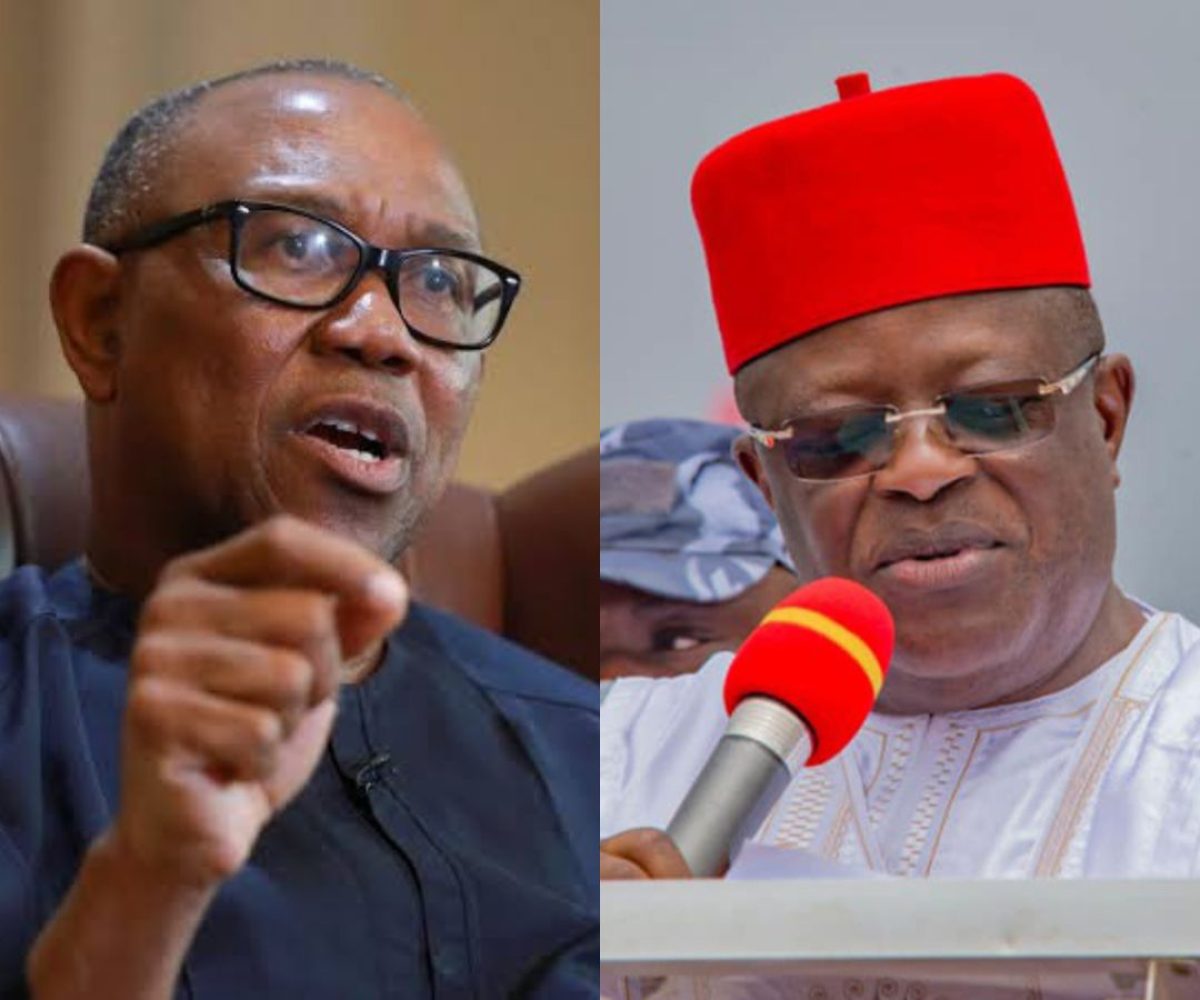
Picture: L-R: Obi and Umahi
… That Obi didn’t consult political leaders before contesting
From The Nijasun News Desk
Nigeria’s Minister of Works, Senator David Umahi, has declared that Peter Obi is not the best presidential candidate the South-East can produce, insisting that the region has other qualified politicians capable of leading Nigeria.
Umahi, a former Ebonyi State governor, made the remarks during an interview with Arise News, arguing that Obi should not automatically be considered the region’s strongest presidential contender.
“Peter Obi is not the best of our finest in South-East. He’s not the best; he can never be the best,” Umahi said.
He criticised Obi for allegedly failing to consult influential South-East political leaders before contesting the presidency in 2023, maintaining that presidential aspirants should engage governors and other stakeholders to build consensus.
“You cannot play politics in South-East without consulting people like us,” he said.
Umahi also rejected the idea that the presidency should automatically go to Anambra whenever the South-East has an opportunity to produce Nigeria’s leader. Citing former President Nnamdi Azikiwe’s Anambra origins, he argued that Ebonyi, Enugu, Abia and Imo should equally be considered.
The minister defended South-East politicians supporting President Bola Tinubu, arguing that political alliances and negotiations with the Federal Government should not be regarded as betrayal of the region.
His comments come amid political realignments ahead of the 2027 presidential election.
Analysis: Popularity, Consensus and the South-East’s 2027 Strategy
Umahi’s criticism raises important questions about whether the South-East should rally behind Obi, consider alternative candidates or prioritise negotiations and alliances with other regions.
His argument that presidential aspirants should consult influential stakeholders has merit because political organisation and coalition-building are essential to winning national elections.
However, consultation does not automatically determine a candidate’s competence, popularity or democratic legitimacy.
Obi’s strong performance in the 2023 election demonstrated his ability to mobilise considerable support beyond traditional political structures, particularly among young Nigerians and voters seeking alternatives to established parties.
If Umahi believes the South-East has better candidates, he must identify them and explain why their records, national appeal, leadership qualities and coalition-building capacity surpass Obi’s.
On the question of fairness among the five South-East states, Umahi is entitled to argue against an automatic presidential entitlement for Anambra.
Nevertheless, the presidency should be determined by constitutional requirements, party nominations and nationwide electoral support, not simply by state rotation or historical precedents.
Similarly, supporting Tinubu is a legitimate political choice, just as supporting Obi or another opposition candidate is. Neither position should automatically be interpreted as loyalty or betrayal based on ethnic identity.
The critical issue is whether political alliances deliver tangible benefits to the South-East in infrastructure, security, industrial development, employment, federal appointments and economic opportunities.
As 2027 approaches, the region faces a strategic choice: consolidate behind an opposition candidate, support the incumbent or develop a coordinated regional agenda that negotiates with presidential contenders across party lines.
Ultimately, the South-East needs more than political rivalry. It needs credible leadership, clear development priorities, effective negotiations and a strategy that advances its interests without undermining democratic choice.
Umahi’s dismissal of Obi may intensify the debate, but the real test is which candidate can demonstrate competence, integrity, national acceptability and a practical commitment to governing Nigeria effectively.
Tags: #PeterObi #DavidUmahi #2027Politics