
By David Onwuchekwa
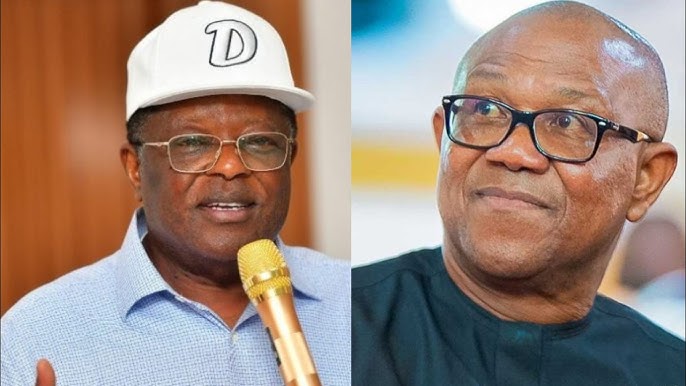
As Nigeria inches closer to the 2027 general election, the political rivalry between Minister of Works, David Umahi, and former Anambra State Governor, Peter Obi, has taken a dramatic turn, shifting from campaign rhetoric to a contest over governance records and political credibility.
What began as an invitation to a public debate has evolved into a war of words that is shaping the national conversation about leadership, accountability and the qualities Nigerians should demand from those seeking the country’s highest office.
Umahi, a former two-term Governor of Ebonyi State and now Minister of Works, insists that the proposed debate was never about presidential ambition.
Rather, he says it was intended to allow two former Governors to present their stewardship before Nigerians and let the public decide whose administration made a greater impact.
Peter Obi, however, dismissed the challenge, arguing that presidential debates are meant for presidential candidates, not cabinet ministers.
Drawing a football analogy, Obi likened the situation to a team that qualified for the FIFA World Cup being challenged by one that failed to qualify.
Umahi’s response was swift and uncompromising. According to the minister, accountability should not be sacrificed on the altar of political status.
In his view, governance is measured by tangible achievements, not by electoral ambitions.
The exchange has reopened an old but important national debate: How should Nigerians measure good leadership?
For years, Peter Obi’s supporters have praised his prudence in managing Anambra State’s finances, often citing the savings allegedly left behind at the end of his administration. His image as a disciplined manager of public funds has become one of the strongest pillars of his political appeal.
Umahi, on the other hand, believes prudent financial management alone cannot define successful governance.
He argues that citizens feel the impact of leadership through roads, bridges, schools, hospitals and other infrastructure that directly improve daily life.
The minister also points to his broader political journey, from state party chairman and Deputy Governor to Governor, Senator and Minister of Works, as evidence of extensive public service experience.
Beyond the personalities involved, the disagreement reflects two contrasting philosophies of governance. One prioritises fiscal discipline and financial prudence, while the other places greater emphasis on visible infrastructure and physical development.
Political observers note that both approaches have their strengths and limitations. Fiscal discipline can help preserve public resources and reduce waste, while infrastructure development often provides immediate economic and social benefits. Ideally, effective governance requires a careful balance of both.
The controversy also raises a broader question about political accountability. Public debates among current and former public office holders remain relatively uncommon in Nigeria.
Such engagements, when conducted respectfully and factually, can help citizens compare records, test competing claims and make more informed political decisions.
Whether or not the proposed Umahi-Obi debate eventually takes place, the exchange has already achieved one outcome: it has shifted public attention from campaign slogans to governance records.
As political alignments continue ahead of 2027, Nigerians are likely to pay closer attention to measurable achievements rather than promises alone.
For many voters, the ultimate question may not be who won the argument over a debate invitation, but whose record best demonstrates the capacity to lead a nation facing enormous economic, security and developmental challenges.
In the end, the real judges are not politicians exchanging statements through the media but the Nigerian people, whose verdict at the ballot box will depend on how convincingly each contender answers the enduring question of leadership: What difference did you make when you had the opportunity to serve?


