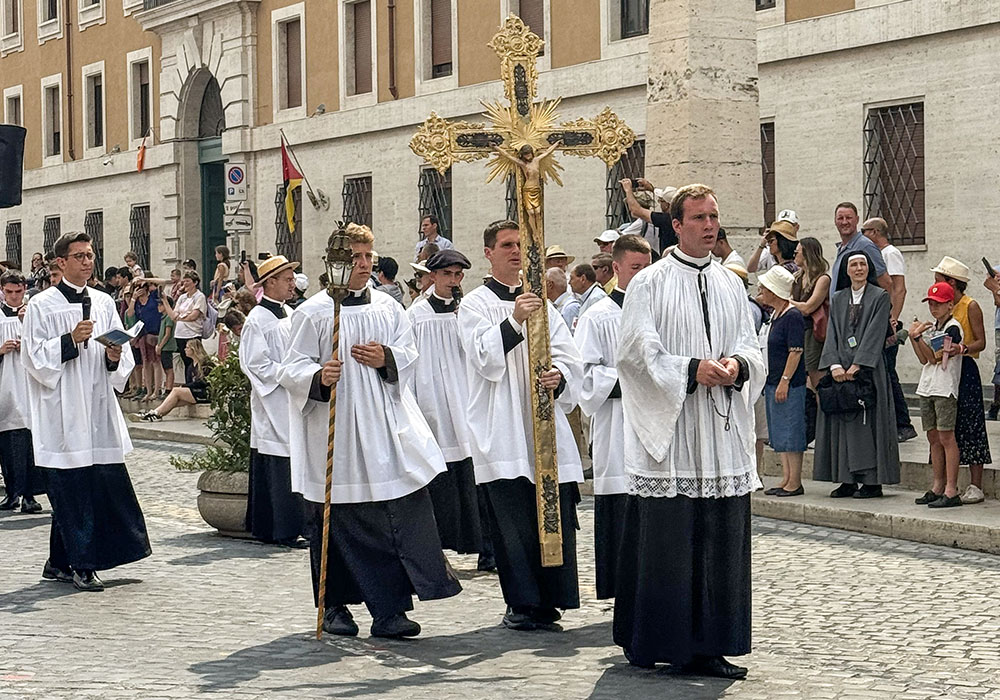
Picture: Seminarians and priests walk in procession to the Holy Door of St. Peter’s Basilica at the Vatican Aug. 21, 2025. The men were among about 8,000 people who joined a pilgrimage sponsored by the traditionalist Society of St. Pius X. (CNS/Cindy Wooden)
An opinion article published by the National Catholic Reporter has called for empathy, dialogue and courage as the Catholic Church confronts its deepening rift with the traditionalist Society of St. Pius X (SSPX), following the group’s decision to consecrate four bishops without papal approval.
The author, James Gordon Reid Haveloch-Jones, argues that while the consecrations constitute a grave breach of canon law and automatically incur excommunication, the Church should not abandon the SSPX but continue seeking reconciliation through patient dialogue.
The article comes as the SSPX proceeded with the July 1 episcopal consecrations in Écône, Switzerland, despite a last-minute appeal by Pope Leo XIV urging the group to reconsider.
The Vatican has maintained that the illicit consecrations trigger automatic excommunication.
According to the author, the crisis extends beyond questions of canon law and reflects the wider challenge of healing divisions within the Church.
Drawing from the teachings of Jesus, the article points to the parables of the lost sheep, the lost coin and the prodigal son as reminders that Christians are called to seek reconciliation with those who have strayed rather than reject them.
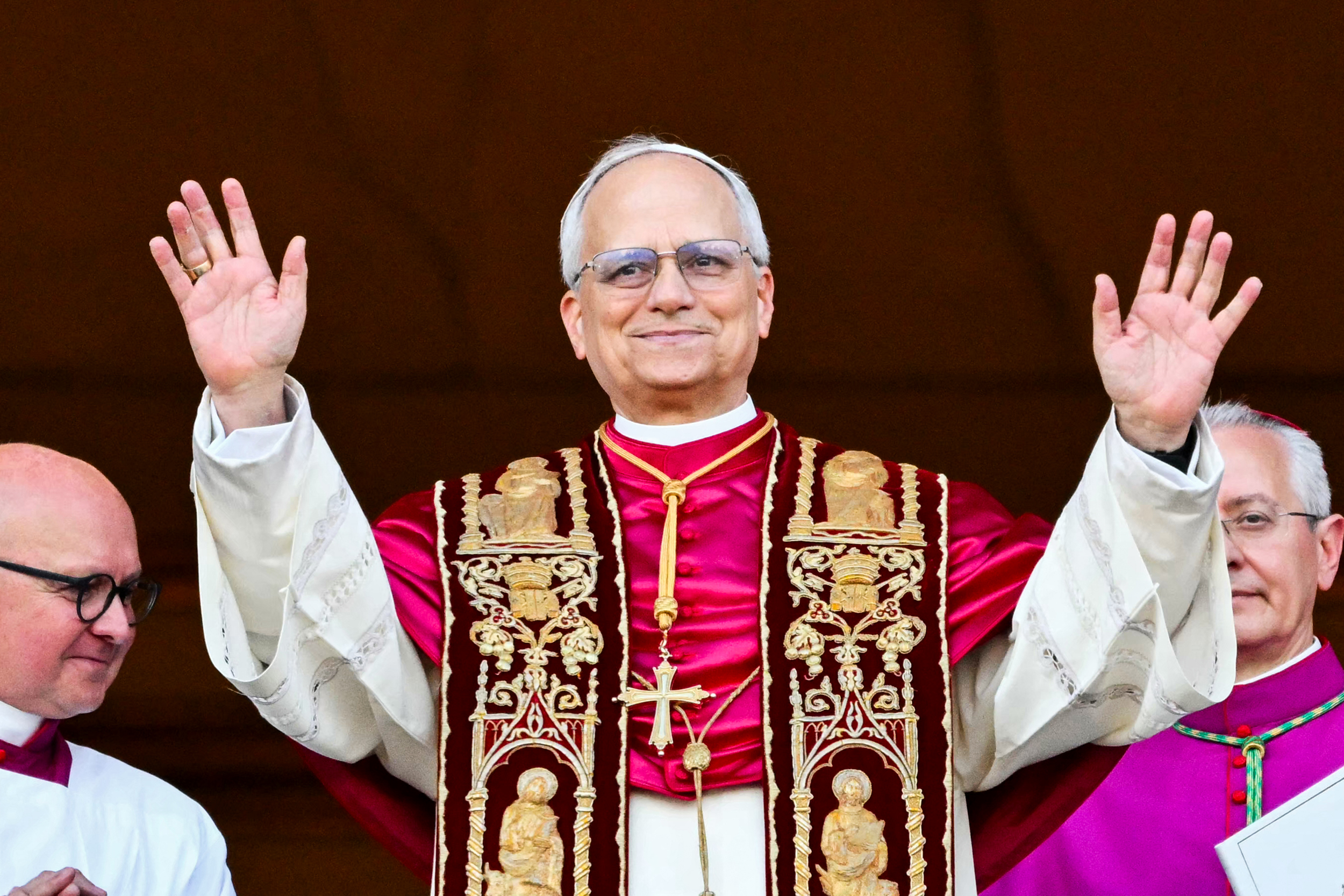
The writer praises Pope Leo XIV’s response, saying the pontiff has chosen prayer and openness instead of condemnation, asking the Holy Spirit to enlighten members of the SSPX rather than abandoning them.
The opinion also links the current dispute to broader issues of justice, peace and unity, warning that polarization and exclusion weaken both the Church and its witness to the world.
The author highlights Pope Leo’s recent meeting with Anglican Archbishop Sarah Mullally of Canterbury as an example of the Vatican’s commitment to dialogue with separated Christians, describing it as evidence that reconciliation remains central to the Pope’s vision.
Beyond theology, the article draws on the psychological theories of Carl Rogers, arguing that genuine reconciliation requires unconditional positive regard, empathy and honesty. It contends that truth without compassion risks driving people further apart instead of fostering understanding.
The author further notes that post-Second Vatican Council documents, particularly Ecclesiam Suam and Gaudium et Spes, place dialogue and attentive listening at the heart of the Church’s mission.
According to the article, the SSPX crisis has a human dimension, affecting faithful Catholics caught between communities and creating uncertainty about belonging within the Church.
Quoting Pope Francis, the writer concludes that authentic dialogue begins with the conviction that every person has something worthwhile to contribute, insisting that the shared grace of baptism remains stronger than divisions within Christianity.
Tags: Vatican, Pope Leo XIV, SSPX, Catholic Church, Second Vatican Council, Religion, Christianity