By Ebuka Onyekwelu, Ph.D
Between last weekend and today, I have been involved in more than a handful of conversations and debates about governance in Anambra State under Governor Charles Chukwuma Soludo.
In yet another debate this evening, I pointed out some of Governor Soludo’s strides in the health sector, particularly the deliberate efforts to strengthen healthcare facilities such as Okpoko General Hospital, Enugu-Ukwu General Hospital, Umueri General Hospital and Ekwulobia General Hospital.
Across Anambra State, Primary Healthcare Centres (PHCs) that had been abandoned for years are now functional. The state’s Commissioner for Health has also introduced telemedicine to improve access to quality healthcare professionals for patients in hard-to-reach communities.
Last month, Management Sciences for Health (MSH) completed its Programme for Equitable Expansion of Community-Based Health Workers (PEECH) project in Anambra State, the first of its kind in Nigeria, aimed at supporting a quality healthcare workforce at the community level. These are things I can speak about from firsthand experience.
Interestingly, throughout the debate, none of these facts was successfully disputed. Yet, the familiar refrain remained: “Soludo is not doing anything.”
The Monday Sit-at-Home Controversy
On another occasion, the debate centred on whether Governor Soludo’s intervention to end the criminal Monday sit-at-home was beneficial or otherwise. Again, I argued from personal experience.
It was Governor Soludo who confronted the situation through his declaration and the closure of Onitsha Main Market after the market failed to comply with the government’s legitimate order to end the Monday sit-at-home.
I have video and photographic evidence showing what Onitsha looked like before Governor Soludo’s intervention and what happened after the order.
Before the intervention, markets in Onitsha were shut every Monday and completely locked up, as though Monday had officially become a non-working day. That was the reality.
Yet, somehow, the argument was that “Monday sit-at-home had ended before Soludo’s intervention.”
Soludo, Otti and the Politics of Performance
I also recall a debate over the weekend about how Governor Alex Otti of Abia State had supposedly “outperformed” Governor Soludo by far.
My response was simple. I shared an article I wrote on August 13, 2023, comparing the experiences of Governors Alex Otti and Chukwuma Soludo in revenue digitisation and arguing that Governor Otti could learn from Governor Soludo’s experience.
As far back as 2022, I shared platforms with Mr. Isaac Okoro, then the former SSA on Revenue to Governor Soludo, who is now serving as Governor Alex Otti’s SSA on Revenue.
There is, therefore, possibly nothing fundamentally new in some of the revenue reforms being discussed today. If anything, Governor Otti could draw lessons from Anambra’s experience under Soludo.
But the comparison between Soludo and Otti appears to have acquired another dimension, one heavily coloured by political sentiments surrounding the Biafra question.
Some of those sympathetic to the cause oppose Soludo because of his decision to end the Monday sit-at-home and his tough stance against criminal elements associated with IPOB. At the same time, they perceive Governor Otti as being softer on such elements.
The argument sometimes takes the form of: “He is fighting his brother. But in the North, they are protecting Boko Haram.”
That position raises a fundamental question: should criminality associated with IPOB be tolerated simply because it is committed in the name of a political or separatist cause?
When Politics Becomes the Measure of Governance
In all these debates, there are a few things that are difficult to miss. Those who argue against Soludo’s performance often appear to be arguing for the sake of disagreement.
While I speak authoritatively about projects and programmes that are physically present in Anambra State, those opposing them have been unable to demonstrate that the projects do not exist. Neither have they convincingly shown that the projects are irrelevant, ineffective or without impact on Ndi Anambra. Their disagreement, therefore, appears largely unanchored in facts.
What made this particularly concerning was that many of the people I engaged with were not ordinary commentators. They were people who should understand how to assess government performance and distinguish political commentary from governance evaluation.
My conclusion is straightforward: in terms of governance delivery, there is little basis for denying that Governor Soludo has raised the bar in Anambra State.
This is a conclusion that should be tested against facts on the ground, not political sentiment.
You Can Oppose Soludo Politically Wthout Denying His Achievements
After observing this pattern of disagreement, I came to another conclusion: there is really no serious debate about whether Soludo has implemented projects and programmes in Anambra.
Rather, some of those who disagree with him appear to disagree primarily on political grounds.
But even in politics, Professor Soludo has distinguished himself and, since 2023, has not lost an election.
Is it therefore reasonable to portray such a politician as someone without political credentials?
Statements such as, “He did not celebrate this person or that person on their birthday,” or “He is supporting APC,” reveal how some people evaluate Governor Soludo’s performance through a political lens.
There is no longer a question of whether a particular policy is good or bad. It becomes simply about politics.
Everybody Has a Political Choice
There is no “special one” coming to rescue Nigeria. Politicians are driven by ambitions, interests and calculations, often wrapped in narratives designed to appeal to their supporters. Soludo, like every other Nigerian politician, is entitled to his political choices.
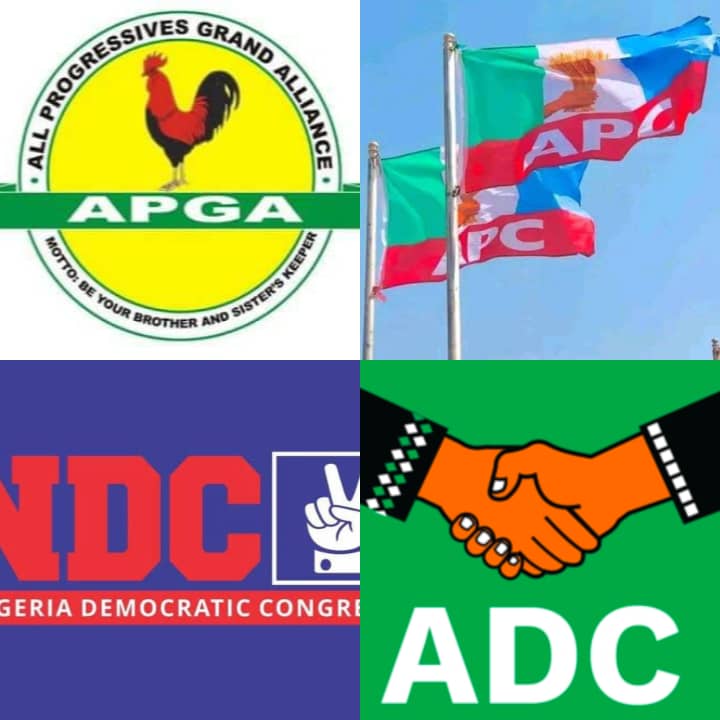
The same way one person supports NDC, another supports ADC, while another supports APC, people are entitled to calculate what they consider the most proximate route to achieving their political interests. Politics, by its nature, is contentious.
Those in ADC cannot ask people to vote ADC without, directly or indirectly, making the case against NDC and APC.
To justify that position, they must present arguments about why the parties in power have failed.
Those in NDC must similarly make a case for their party while explaining why voters should not support APC or ADC. The same principle applies to Soludo.
He belongs to APGA but supports President Bola Ahmed Tinubu for the presidency. Therefore, his political position may be summarised as: vote APC for President and APGA for National and State Assembly seats.
That necessarily means asking voters not to vote ADC or NDC in those contests. That is politics. And there is nothing particularly unusual about it.
The Double Standard Is the Real Problem
The oddity begins when people insist that they have an unquestionable right to support their preferred candidate but believe Governor Soludo should not exercise the same right. The right to choose a preferred candidate does not belong exclusively to those who disagree with Soludo. Everyone has that right
What is profoundly contradictory is to deliberately deny a governor’s governance achievements simply because one disagrees with his political choices, while simultaneously defending one’s own political choices under the banner of “public interest.”
A governor who is considered politically successful should not suddenly lose his constitutional and democratic right to participate in politics simply because his choice does not align with another person’s preference. Political disagreement does not erase strong governance. And disagreement with Governor Soludo’s politics is perfectly legitimate.
But denying verifiable achievements merely because of that disagreement is a different matter altogether. There are, indeed, levels to irrationality.
Tags: #Anambra #Soludo #Governance #Politics