
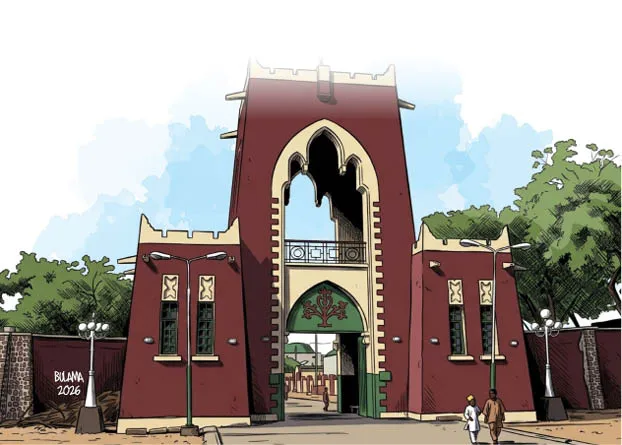
From The Nijasun News Desk
The ancient city of Kano has emerged as the world’s ninth most populous city, with an estimated population of 17.5 million people, according to the World Population Review 2026 report.
According to Daily Trust, the ranking places Kano alongside some of the world’s largest urban centres, including Shanghai, Beijing, Shenzhen, Guangzhou and Chengdu in China; Delhi and Mumbai in India; Kinshasa in the Democratic Republic of Congo and Karachi in Pakistan.
The report puts Kano’s 2026 population at 17,510,247, up from 3,005,222 recorded in 1991, representing more than a five-fold increase in 35 years.
It also projects that the city’s population could surpass 20 million by 2030 if its current growth rate continues.
Kano’s rapid population growth has been attributed to natural population increase, migration, commercial activities and its position as a major trading hub in northern Nigeria.
The city recorded an annual growth rate of about 3.16 per cent and added more than 536,000 people within the last year, the report said.
The development has generated debate over the population figures, particularly comparisons between Kano and Lagos.
The report estimates Lagos at 14.8 million people in 2026, placing Kano ahead of Nigeria’s commercial capital in population.
Data from the National Population Commission (NPC) also shows Kano’s sustained population growth. The 1991 census recorded 5,810,470 people in Kano State, while the figure rose to 9,401,288 in 2006.
Subsequent estimates by the National Bureau of Statistics and NPC put the state’s population at 13.4 million in 2016 and 15.46 million in 2022, while the NPC’s 2026 estimate stands at 16,253,549.
Analysts said Kano’s growth has been driven by its long-standing commercial importance, high fertility rates, migration and urban expansion.
The city has also attracted people displaced by insecurity in parts of the North-East and North-West, including communities affected by insurgency and banditry.
Its relative stability, economic opportunities and cultural links have made it a major destination for displaced families.
Kano’s commercial activities have equally contributed to its population growth, with markets such as Kurmi, Sabon Gari, Kantin Kwari and Dawanau attracting traders, transporters and consumers from across Nigeria and neighbouring countries.
The city’s textile, agricultural, manufacturing and service sectors also provide livelihoods for millions of people.
However, experts warned that the rapid population growth could place enormous pressure on infrastructure and public services if not properly managed.
Roads, public transportation, housing, healthcare, education, water supply and sanitation are already facing increasing pressure, while informal settlements continue to expand.
Employment is another major concern, particularly because young people constitute a significant proportion of Kano’s population.
A Kano-based historian and independent researcher, Dr Ibrahim Ado Kurawa, warned that failure to provide education and productive economic opportunities could increase unemployment, crime and social unrest.
He said Kano needed to prioritise agriculture, manufacturing and energy in order to convert its population into productive human capital.
According to him, inadequate electricity supply remains a major obstacle to industrial development.
Kurawa also called for improved public transportation, environmental sanitation and waste management, saying Kano needed to learn from other major cities around the world.
An economist and lecturer at Sa’adatu Rimi College of Education, Kano, Dr Abdussalam Muhammad Kani, said population growth should not necessarily be regarded as a problem.
Kani, who is also Executive Director of the Fiscal Discipline and Development Advocacy Centre, said the real challenge was whether government could make the population productive.
He cited China as an example of how investment in human capital could transform a large population into an economic advantage.
Kani said Kano must significantly invest in education, healthcare, agriculture, security and reliable electricity to create jobs and revive industries.
He also advocated incentives for education, entrepreneurship and business development.
Similarly, a sociologist at Kwara State University, Dr Moshood Isa, described Kano’s population growth as a potential demographic dividend that could become a burden if poorly managed.
Isa said the population could provide Kano with a large labour force and consumer market capable of attracting investment into manufacturing, agriculture, financial services and entrepreneurship.
He, however, warned that unemployment, infrastructure deficits, environmental pressure, rapid urbanisation and insecurity could undermine the benefits.
He said an unemployed and economically excluded young population could become vulnerable to crime, political violence, violent extremism and recruitment into criminal networks.
Meanwhile, the Kano State Ministry of Land said it was working on a new Kano Masterplan covering 2025 to 2045 to guide the city’s expansion.
The Director of Public Enlightenment in the ministry, Murtala Shehu Umar, said the plan would provide for industrial, commercial and residential areas while improving land allocation and development.
He said the masterplan would also address environmental challenges, including flooding, and curb illegal construction.
The Kano State Government said it was already taking steps to address the pressures associated with the growing population.
The Chief Press Secretary to the Governor, Mustapha Muhammad, said the administration had rehabilitated primary healthcare centres and constructed about 10 general hospitals.
He added that more than 18,000 teachers had been recruited, while new schools were being constructed and existing ones renovated.
On housing, Muhammad said the government had initiated the construction of more than 400 houses, with about 50 already underway across various local government areas.
He also said the government had unveiled five-year and 20-year rural development plans covering water supply, electricity, housing and roads.
Kano has 44 local government areas, the highest number of LGAs in Nigeria.
NPC data identifies eight metropolitan LGAs as the most densely populated parts of the city in 2026. They are Dala, estimated at 779,900; Fagge, 350,000; Gwale, 650,000; Kano Municipal, 691,500; Kumbotso, 540,000; Nassarawa, 1,110,800; Tarauni, 400,000; and Ungogo, 601,500.
Together, the eight metropolitan councils account for about 4.8 million people, while the remaining 36 rural and semi-urban LGAs account for close to 12 million residents.
Experts said the population growth represented both a challenge and an opportunity for Kano.
They stressed that sustained investment in infrastructure, human capital, agriculture, manufacturing, transportation, housing, energy and environmental management would be critical to ensuring that the city’s population boom translates into economic development rather than social and infrastructural pressure.
Kano has for centuries remained one of northern Nigeria’s most important commercial centres.
Its strategic location has made it a major link between northern and southern Nigeria as well as neighbouring countries, while its historic markets, agriculture, manufacturing and trading activities continue to drive economic activity across the region.
With its emergence among the world’s most populous cities, analysts say Kano now faces the urgent task of matching its demographic expansion with effective urban planning, infrastructure and economic opportunities for its growing population.
Tags: Kano, Megacity, Population, NPC, Urbanisation, Nigeria


