
By Ebuka Onyekwelu, Ph.D
The remarkable journey of Mr. John Ezeobi, founder of Zobis Cables, from offloading yams in Ogbaru to building a massive cable manufacturing industry, has emerged as a powerful example of the values driving Governor Chukwuma Soludo’s youth reformation agenda in Anambra State.
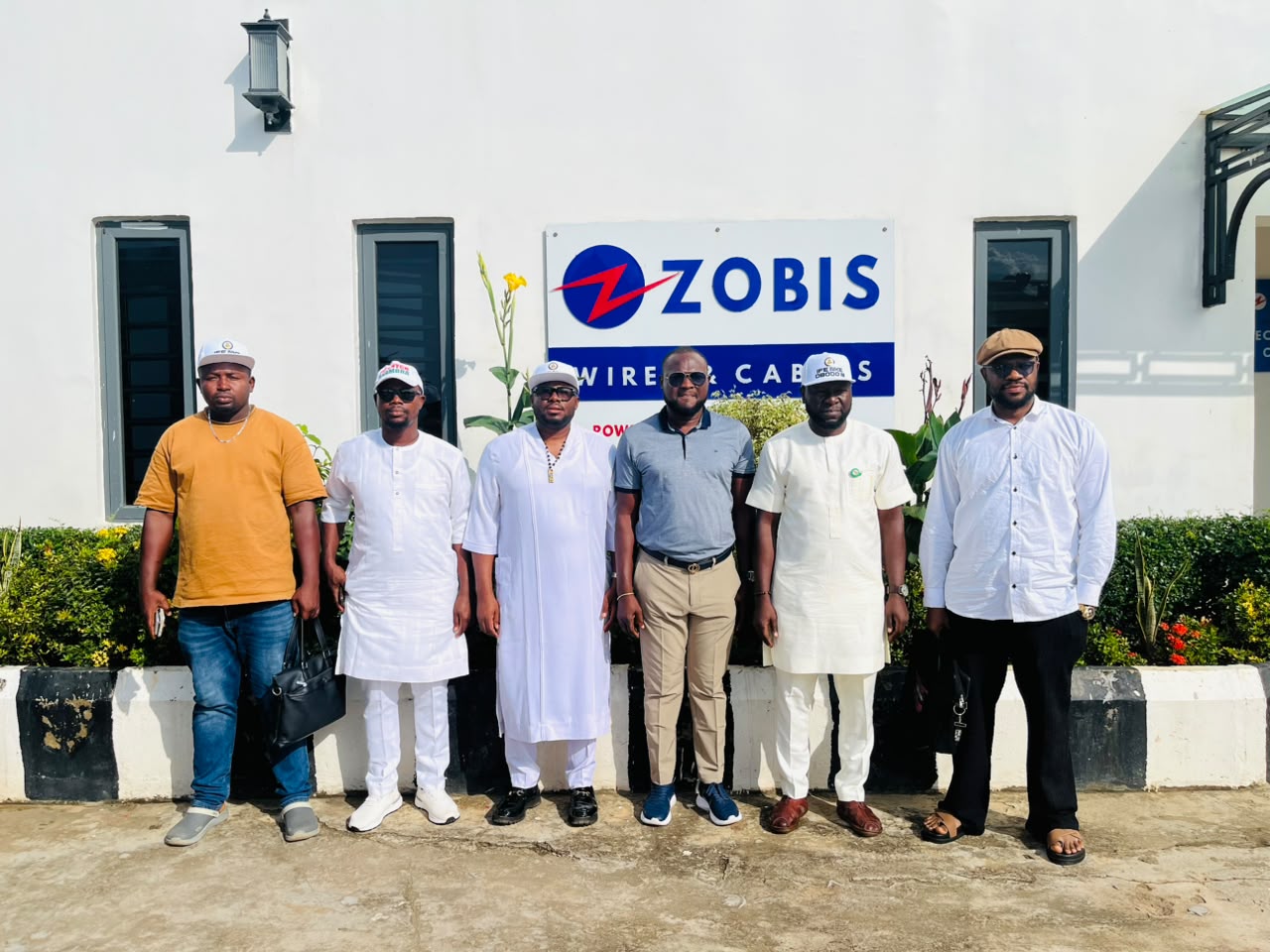
Last Wednesday, Dr. Nelson Omenugha, Special Adviser to Governor Soludo on Youth Reformation, led a delegation of young people on a courtesy visit to Ezeobi at his industrial complex in Ogbaru. What began as a brief visit developed into several hours of inspiring conversations about leadership, entrepreneurship, industry, discipline and personal development.
Ezeobi’s story, according to the delegation, offers valuable lessons for a generation of young people seeking legitimate pathways to success.
A man of conviction who prefers to concentrate on building rather than attracting unnecessary attention, Ezeobi has demonstrated that extraordinary achievements can emerge from humble beginnings when driven by a clear vision, hard work and perseverance.
His journey began in Ogbaru, where he initially worked in the business of offloading yams harvested by farmers and transported by boats to the riverbank. He later established a pure water production business at the same location where his expansive Zobis Cables industrial complex now stands.
Today, the entrepreneur has built a major cable manufacturing enterprise with operations extending beyond Anambra State to Abuja, while pursuing an ambitious vision of transforming his Ogbaru facility into a continental industrial powerhouse.
During the visit, Ezeobi presented the delegation with drawings of his proposed industrial expansion, revealing plans for a much larger complex incorporating administrative and research facilities across an extensive expanse of land.
His vision left a strong impression on the delegation, reinforcing the belief that Anambra State has the potential to attract significant industrial activity from across Africa if its entrepreneurs continue to invest, innovate and expand.
For Omenugha and the Youth Reformation team, Ezeobi embodies the values the Soludo administration seeks to promote among young people: diligence, integrity, discipline, self-reliance and the determination to create wealth through legitimate enterprise.
Governor Soludo has consistently advocated what he describes as wealth with industry—a philosophy that emphasises productive work, enterprise and value creation rather than unexplained wealth and the ostentatious display of riches.
Ezeobi’s journey illustrates this principle. His success has a traceable history, beginning with modest commercial activities and progressing through entrepreneurship into large-scale manufacturing.
There is, therefore, nothing shameful about starting small while pursuing a big dream. Rather, the journey from humble beginnings to meaningful achievement can provide the strongest evidence of the vision, discipline and sacrifice behind genuine success.
Unfortunately, society is increasingly confronted with the public display of wealth without any clear account of the enterprise or productive activity that generated it. Such a culture stands in sharp contrast to the values of the new Onye Anambra that the state government seeks to nurture.
The new Onye Anambra is expected to be resourceful, industrious, innovative and committed to building wealth through honest means, drawing inspiration from the entrepreneurial traditions that have distinguished the people of Anambra across generations.
At just 42, Ezeobi represents an encouraging example for young people searching for mentors whose achievements are rooted in enterprise and hard work.
Beyond the industrial infrastructure he has already established, his ambition to develop a more extensive manufacturing and research complex demonstrates that genuine success is not defined solely by present accomplishments but also by the capacity to envision and build a greater future.
His story sends a powerful message: one young person with a clear vision, the courage to start small and the determination to persevere can create opportunities that benefit generations.
This is the central message of the youth reformation agenda being championed by Omenugha on behalf of the Soludo administration. It seeks to inspire young people to look beyond immediate gratification and embrace productive ventures capable of transforming their lives and contributing to the development of society.
The visit also revealed another important dimension of Ezeobi’s entrepreneurial philosophy: his relationship with his workforce and the surrounding community.
While taking the delegation around the facility, the team observed what it described as a cordial relationship between the entrepreneur and his employees. Ezeobi expressed pride in their work ethic and acknowledged their contributions to the company’s achievements.
The industrial complex features well-built and furnished staff quarters, a gymnasium for employees and a hospital established to provide healthcare services to Zobis Cables workers and members of the host community. Additional staff accommodation is also being developed behind the hospital.
These facilities suggest an approach to industrial development that goes beyond manufacturing and profit-making to include employee welfare and community responsibility.
In this regard, Ezeobi’s enterprise represents more than a business success story. It illustrates how private investment can generate employment, strengthen local economic activity and contribute to the provision of essential services within host communities.
His experience also reinforces the importance of building enterprises that create value for workers and communities while contributing to the broader economic development of Anambra State.
For young people aspiring to make their mark in manufacturing and other productive sectors, Ezeobi’s example offers a practical lesson: success does not necessarily begin with enormous capital or public recognition. It can begin with a modest business, a willingness to work and a vision that grows through experience, discipline and reinvestment.
Anambra has long been associated with entrepreneurial achievements, particularly in Nnewi and Onitsha, where numerous businesses have grown from small trading ventures into substantial commercial and industrial enterprises.
Ezeobi’s journey adds to this tradition and reinforces the argument that the state’s next generation of industrialists can emerge from among young people willing to embrace honest work, innovation and long-term planning.
As the Soludo administration continues to promote youth reformation, stories such as Ezeobi’s provide tangible examples of the transformation it seeks to inspire.
Ultimately, the challenge before Anambra youths is to turn inspiration into action by identifying opportunities, developing relevant skills, pursuing legitimate businesses and remaining committed to their goals.
John Ezeobi’s story demonstrates that humble beginnings need not determine the limits of one’s future. With vision, hard work and perseverance, a small beginning in Ogbaru can become the foundation of an industrial enterprise with ambitions reaching across Africa.
For a generation in search of role models, that is a lesson worth embracing.
Tags: John Ezeobi, Anambra Youth Reformation, Zobis Cables, Nelson Omenugha, Soludo


