By David Onwuchekwa
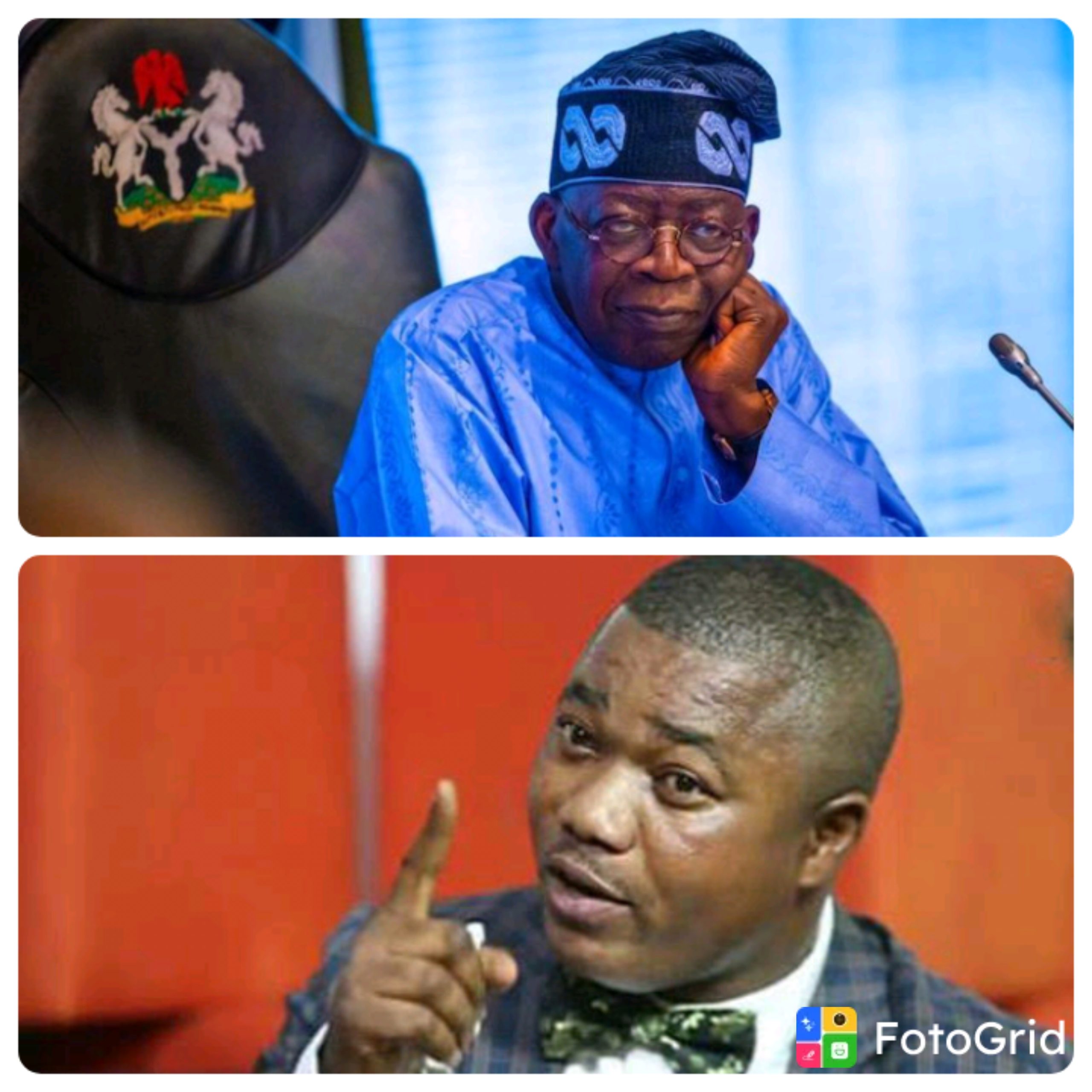
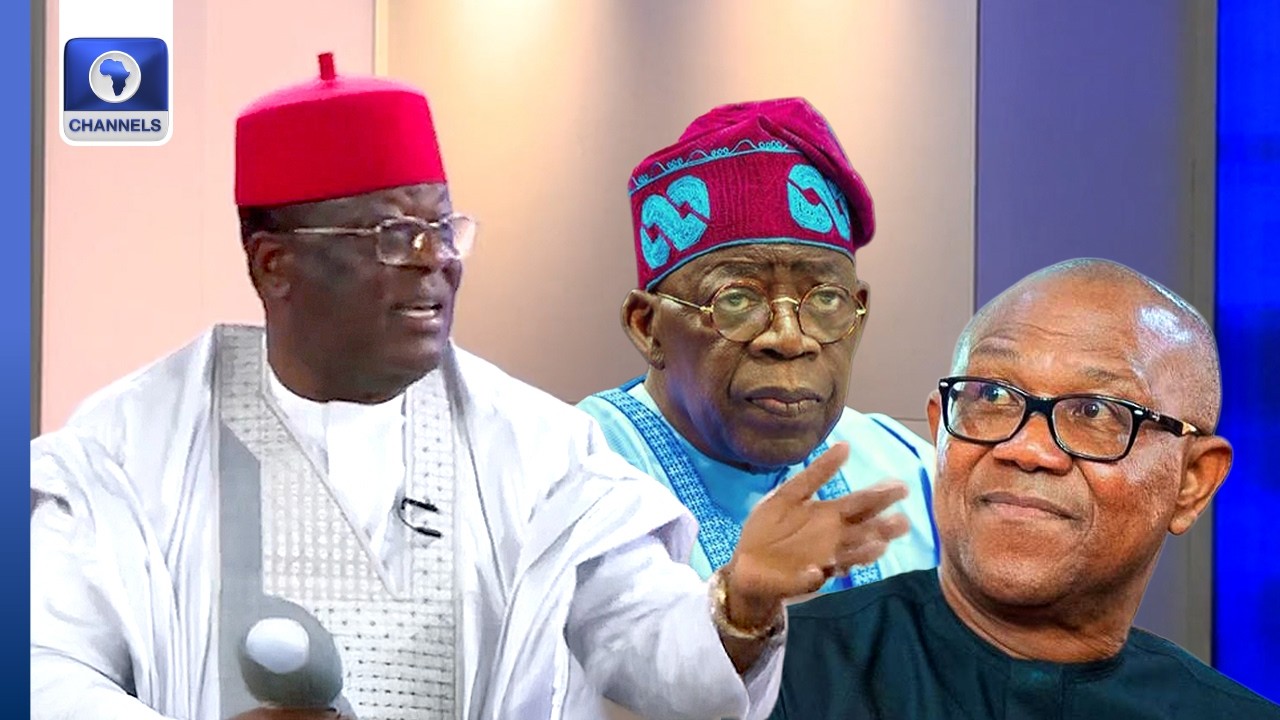
Minister of Works, Senator David Umahi, has stirred another political controversy in the South-East with his declaration that the region has no presidential candidate in the 2027 general election, dismissing Peter Obi as “nobody” and urging Ndigbo to support President Bola Tinubu’s re-election bid.
According to a report published by the Daily Sun on November 2, 2026, Umahi made the remarks during a town hall meeting organised by the Directorate of Infrastructure, Mobilisation and Sensitisation of the All Progressives Congress (APC) Presidential Campaign Council in Abakaliki, Ebonyi State.
His argument rests on a political calculation: that the South-East should support Tinubu for another four years as a strategic investment towards securing the presidency when it becomes the region’s turn.
While this argument may appeal to politicians who believe in negotiation, political alliances and gradual power consolidation, it raises fundamental questions about the meaning of political relevance, regional ambition and democratic choice.
The politics of strategic patience
Umahi’s position suggests that Ndigbo should temporarily abandon the pursuit of the presidency and concentrate on building political relationships with the ruling establishment.
His argument is that supporting Tinubu through 2027 could strengthen the South-East’s bargaining position in future presidential calculations.
However, there is a fundamental weakness in this proposition. Political support does not automatically translate into political entitlement.
There is no constitutional provision or established political agreement guaranteeing that a region that supports an incumbent president will automatically receive the presidency in the next political cycle.
The South-East supported different political arrangements in previous elections without necessarily translating such support into the highest political office.
Consequently, Umahi needs to explain what concrete political guarantees, beyond assurances and expectations, would make another four years of waiting worthwhile.
Strategic patience without a negotiated framework can easily become indefinite political postponement.
Dismissing Peter Obi does not erase his political relevance
Perhaps the most controversial aspect of Umahi’s declaration is his description of Peter Obi as “nobody” and his question about whether Obi is better than prominent political figures from Ebonyi State, including former Governor Sam Egwu, former Senate President Anyim Pius Anyim, former RMAFC Chairman Elias Mbam and Umahi himself.
This comparison misses the central issue.
Presidential politics is not a competition over who has the most impressive political résumé or who is more accomplished among prominent individuals from a particular state.
Peter Obi’s political relevance is determined by his political following, electoral appeal, national recognition and the support he commands among Nigerians.
Whether one supports him or disagrees with his political positions, dismissing him as nobody does not answer the questions surrounding his electoral strength.
Indeed, the more significant question is why a minister who believes the South-East should negotiate its political future through strategic alliances finds it necessary to diminish another prominent political figure from the same region.
Regional political negotiations require accommodation, not unnecessary personal attacks.
Is the South-East politically integrated or still negotiating for acceptance?
Umahi also argued that the South-East has been fully integrated into the Tinubu administration, citing appointments, including the positions of Minister of Works and Chief of Air Staff, as evidence.
This is an important argument, but political integration should not be measured exclusively by appointments.
It should also be assessed through economic opportunities, infrastructure distribution, federal presence, security, political representation and the extent to which the region participates in national decision-making.
The appointment of prominent Igbo individuals into federal positions is commendable. But holding appointments in government is not the same as achieving regional political equality.
More importantly, if the South-East is already fully integrated, as Umahi insists, why should the region approach the 2027 election from a position of political anxiety about securing acceptance?
There is a difference between being part of a government and having sufficient political leverage to negotiate the country’s highest office.
The danger of turning regional ambition into a political bargain
Umahi’s position also raises questions about the consequences of asking the South-East to support another region’s presidential ambition when the region itself has political aspirations.
Nigeria’s democracy operates through political parties, constitutional provisions and electoral competition. No region is constitutionally prohibited from presenting a presidential candidate simply because another region currently occupies the presidency.
The South-East has the democratic right to support Tinubu, Peter Obi or any other candidate. It equally has the right to produce its own presidential aspirant.
Therefore, Umahi’s declaration that the region has no presidential candidate is a political opinion, not a constitutional reality.
Even if the APC minister believes that supporting Tinubu is the best strategy for Ndigbo, he cannot automatically speak for every political tendency, voter or interest group in the region.
The South-East is not a political monolith
The 1.3 million votes challenge
Umahi’s boast that he would deliver 1.3 million votes from Ebonyi State for Tinubu and Governor Francis Nwifuru also deserves scrutiny.
He cited 1.8 million registered voters in the state and argued that delivering 1.3 million votes would be necessary to demonstrate political commitment.
However, registered voters are not the same as accredited voters, and accredited voters are not necessarily the same as valid votes.
Electoral outcomes are determined by actual participation, voter preferences and the credibility of the electoral process.
A political leader’s declaration of anticipated votes does not guarantee that voters will follow his instructions.
The 2023 general election demonstrated that political structures and endorsements do not always translate into predictable voting patterns.
The electorate is becoming increasingly assertive, and the assumption that political leaders can deliver millions of votes as though they control private electoral estates may prove misleading.
Umahi’s confidence may energise the APC mobilisation machinery, but the real test will come at the ballot box.
Soludo’s coalition and the emerging South-East political calculation
Against the backdrop of Governor Charles Soludo’s emerging coalition involving APGA, APC, PDP and Accord political parties, leaders in Anambra State, Umahi’s position reflects a broader attempt by pro-Tinubu political forces to consolidate the South-East behind the President ahead of 2027.
The development suggests that influential political actors in the region are increasingly looking beyond party differences to negotiate a stronger relationship with the federal government.
In any case, the success of this strategy will depend on whether it can accommodate competing political interests, including those who believe the South-East should pursue an independent presidential ambition.
A regional coalition that seeks to deliver Tinubu must also demonstrate that it represents more than political officeholders, traditional rulers and party leaders.
It must connect with ordinary voters, young people, traders, professionals and communities whose economic and political experiences ultimately determine electoral outcomes.
The bigger question
Umahi may be right that the South-East needs stronger political alliances to improve its chances of producing a Nigerian president. He may also be right that political negotiations require compromise and that regional interests should not be driven entirely by emotions.
But strategic politics must have identifiable objectives, measurable commitments and a clear destination.
Supporting Tinubu for another four years in the expectation that the South-East will subsequently receive the presidency is a political gamble, not a guaranteed succession arrangement.
The question Umahi and other proponents of the strategy must answer is what happens if the South-East delivers the promised votes in 2027 but the presidency remains beyond its reach in 2031?
Will the region continue waiting, or will it finally insist on its own presidential ambition?
For Ndigbo, the challenge is not simply whether to support Tinubu or Peter Obi. It is how to build a united, influential and credible political bloc capable of negotiating national power without surrendering its democratic choices.
Umahi’s declaration may strengthen the APC’s campaign narrative, but it has also reopened an uncomfortable debate about whether the South-East is pursuing political inclusion or gradually negotiating away its presidential ambition.
Tags: David Umahi, Peter Obi, Tinubu 2027, South-East Politics, 2027 Elections.