
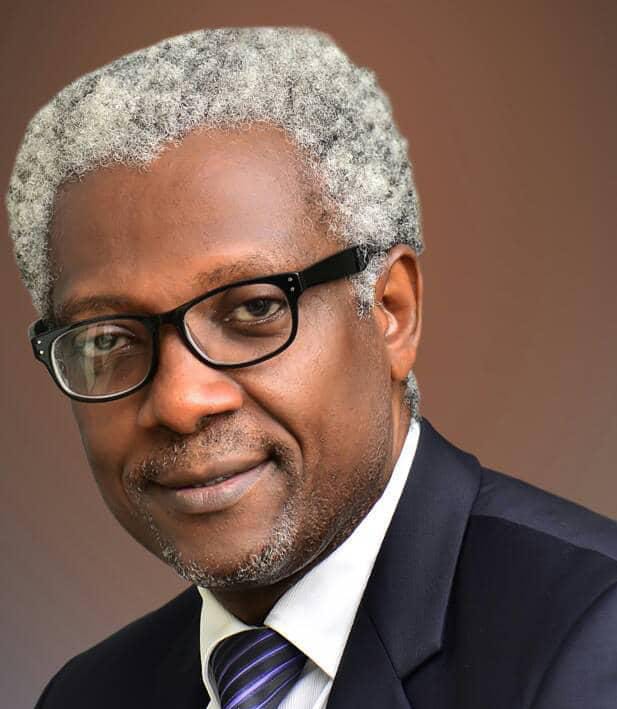
Picture: Prince Samben Nwosu
From The Nijasun Feature Desk
For Prince Samben Ikechukwu Nwosu, the ambition to represent Anambra South Senatorial District in the National Assembly is not merely about occupying a seat in Abuja but about changing the way political representation is understood and practised.
The Peoples Democratic Party (PDP) candidate for the 2027 Anambra South Senatorial election says he is offering himself as a different kind of politician, with a style of representation centred on accessibility, grassroots participation, economic empowerment and measurable community development.
Nwosu, who has a background spanning public service, politics and business development, served as the Federal Commissioner representing Anambra State at the Public Complaints Commission (PCC) from 2018 to 2021.
Before and after his federal appointment, he was active in the PDP, serving at different times as chairman of the party in Otolo Ward One, Nnewi North, local government publicity secretary, state organising secretary and state publicity secretary. He also worked at the party’s national secretariat.
His political experience at grassroots and national levels, coupled with his public service background and involvement in business development, preceded his emergence as the PDP candidate for Anambra South.
Speaking during a media chat with Our Correspondent at his residence in Ndiakwu, Otolo, Nnewi North Local Government Area of Anambra State, Nwosu said his ambition was to serve as a bridge between the people and the Federal Government.
He said he would approach the Senate as a servant-leader whose responsibility would be to take the concerns of constituents to Abuja and pursue solutions through relevant federal institutions and advocacy.
For Nwosu, representation should not create a distance between an elected representative and the people who gave him the mandate.
He rejected what he described as the culture of tinted vehicles, convoys and sirens, arguing that political office should be measured by accessibility and service rather than the trappings attached to it.
From grassroots politics to the Senate race
Nwosu’s political journey, as he tells it, began at the grassroots.
He rose through the ranks of the PDP from ward-level activities to local government and state responsibilities before working at the party’s national secretariat.
He said the experience had exposed him to the workings of politics from the grassroots upward and strengthened his understanding of the concerns of ordinary citizens.
Nwosu also recalled a difficult childhood after the death of his father while he was preparing for the common entrance examination.
According to him, he took up different jobs to survive, including climbing palm trees to harvest palm fruits, excavating sand from gutters for sale and barbing hair from his secondary school days until he became a graduate of the higher institution.
He said the experiences shaped his understanding of the struggles faced by people at the grassroots and influenced his decision to pursue a form of politics centred on empowerment.
‘My job has always been making people rich’
Beyond politics, Nwosu presents himself as a businessman and Certified Business Developer with experience helping entrepreneurs and small businesses access grants, loans and other opportunities.
He said he had assisted business owners to access funding through the Bank of Industry and would seek to replicate such opportunities for constituents if elected.
Economic empowerment, he said, would therefore be a major component of his proposed representation.
Rather than relying solely on physical projects, Nwosu wants constituents to participate in identifying the needs and priorities of their communities.
He proposed the creation of committees in each local government area of Anambra South to identify specific local challenges and feed them into the development process.
He noted that the needs of communities in Aguata, Nnewi and Ihiala, for instance, would not necessarily be the same and should therefore not be approached with a one-size-fits-all policy.
He also proposed greater involvement of constituents in the preparation of annual budgets and community development priorities.
Experience of the senatorial by-election
The 2027 contest is not Nwosu’s first attempt to seek the Anambra South senatorial mandate.
Following the death of Senator Patrick Ifeanyi Ubah, he said he expressed interest in the subsequent senatorial by-election but was unable to secure a place on the ballot.
He said he accepted the outcome in the spirit of sportsmanship and continued with his political activities.
This time, Nwosu emerged as the PDP candidate after a competitive senatorial primary in which he faced Chief Chris Ubah, another PDP bigwig in Anambra.
He described the outcome as the result of hard work and the resolve of party members who wanted a change.
With the ticket secured, Nwosu said he considered the mandate an obligation to justify the confidence placed in him.
Challenging the ‘sirens and convoys’ culture
A recurring theme of Nwosu’s campaign is his opposition to what he considers the excessive emphasis on the privileges attached to political office.
He questioned the value of official vehicles, police escorts, convoys and sirens when compared with the actual needs of constituents.
According to him, his campaign is focused on direct engagement with voters rather than displays of political status.
He said he would seek to convince voters through his plans and record rather than through the distribution of money or display of trappings of public office including the use of convoys.
‘I have no godfather’
Nwosu has also made political independence a major part of his campaign narrative.
He said he would take personal responsibility for his performance if elected, insisting that constituents would not hear excuses that a political godfather prevented him from taking particular decisions.
He urged voters to scrutinise the records, intentions and accessibility of candidates before making their choices.
For him, political leadership should be based on a candidate’s willingness to serve rather than dependence on powerful individuals.
A candidate who says he knows the grassroots
Nwosu points to his years in party organisation as evidence of his familiarity with communities across Anambra.
He said his political network extends across the state’s 326 wards, giving him exposure to the concerns and expectations of people at the grassroots.
He argued that a senator should not wait until after assuming office before trying to understand the problems of constituents.
Looking beyond Abuja
Nwosu said the ultimate purpose of going to Abuja would be to establish a stronger connection between Anambra South and federal institutions.
He sees the senator as a bridge through which local challenges can be presented to the Federal Government and opportunities channelled back to the district.
Accessibility, he said, would be central to achieving that objective because constituents must be able to communicate their needs to their representative.
His proposed model is one in which constituents would participate in determining priorities, have access to their representative and hold the representative accountable for the issues pursued on their behalf.
Nwosu enters the contest with a message centred on service, accessibility, grassroots participation and economic empowerment, while drawing heavily on his personal journey from ward-level politics and economic hardship to a bid for national office.
His central proposition is that representation should be defined less by the privileges of office and more by what constituents are able to access through their representative.
For a candidate whose political story is rooted in grassroots organisation, Nwosu is presenting the “servant-leader” concept as the defining identity of his campaign as he seeks the mandate of the people of Anambra South.


