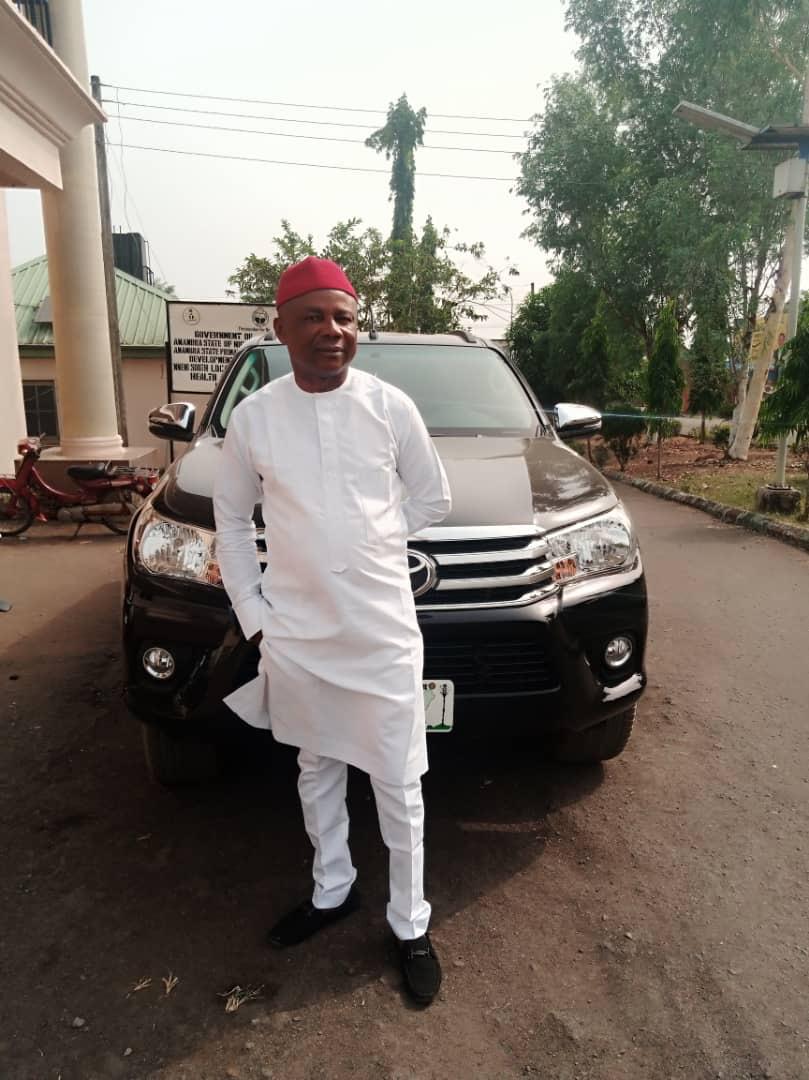

By David Onwuchekwa
Ogbaru Federal Constituency of Anambra State now poised to move to the next level to avoid mistakes of the past in electoral mandate, to resist wrong political endorsements and ignore empty campaign promises.
It is time to confront the fundamental question of what the constituency has gained from its enormous economic potential, natural resources, population and strategic geographical location.
Ogbaru is one of the most naturally endowed areas of Anambra State. With its extensive agricultural land, waterways, oil-bearing communities, commercial activities and proximity to Onitsha, the constituency possesses enormous economic advantages.
Yet, these advantages have not translated into the level of infrastructure, employment opportunities, healthcare delivery and general development expected by its people.
The contradiction is difficult to ignore. A constituency blessed with agricultural resources, crude oil deposits and significant human capital continues to struggle with poor road networks, recurring flooding, inadequate public infrastructure and limited economic opportunities for its teeming youth population.
This is the development question that should define the 2027 House of Representatives election.
The Infrastructure Crisis: Ogbaru Cannot Continue This Way
Perhaps the most visible challenge confronting Ogbaru is its deplorable road infrastructure.
The Onitsha-Atani-Ossomala-Ogwuikpele-Ndoni Road remains one of the most critical transportation routes in the constituency. Its condition has repeatedly attracted public concern and legislative attention. In October 2023, the House of Representatives called on the Federal Ministry of Works to make provisions for its completion in the 2024 budget and directed the Federal Roads Maintenance Agency (FERMA) to provide interim interventions.
The road is not merely a transportation facility. It is an economic lifeline connecting farming communities, markets, residential settlements and neighbouring states.
When roads become impassable, farmers cannot conveniently transport their produce, traders lose business opportunities, transportation costs increase and investors become discouraged.
Other communities also require effective road connectivity, drainage systems, bridges and access infrastructure.
Okpoko, Atani, Iyiowa-Odekpe, Ossomala, Ogwuikpele, Obeagwe and other communities must be integrated into a functional transportation network.
Flooding compounds the problem
Ogbaru’s geographical location makes it particularly vulnerable to annual flooding, which destroys homes, farmlands, roads, businesses and other investments.
The solution requires more than temporary road repairs. It requires sustained federal and state collaboration, flood-control infrastructure, effective drainage, river management, ecological interventions and long-term environmental planning.
This is where effective representation at the National Assembly becomes important.
Federal Presence: Where Are the Benefits?
Another issue deserving serious attention is the limited visibility and impact of federal development institutions and interventions in Ogbaru.
The constituency has important connections to federal institutions and development programmes, but the existence of a federal project or allocation does not automatically translate into meaningful benefits for residents.
For instance, the Federal Polytechnic Oko’s Atani campus represents an important federal educational presence in the area. However, its development, facilities, expansion and relationship with its host communities deserve sustained attention.
There is also the Federal Government’s responsibility through the Niger Delta Development Commission (NDDC), particularly considering Ogbaru’s oil-bearing communities and environmental challenges.
The federal road network, Federal Ministry of Works, FERMA, the NDDC, the Federal Ministry of Environment and relevant agencies responsible for ecological interventions must become more visible in addressing Ogbaru’s developmental needs.
The constituency must also pursue stronger engagement with the National Oil Spill Detection and Response Agency (NOSDRA), the Nigerian Upstream Petroleum Regulatory Commission (NUPRC) and other relevant institutions to address environmental degradation, oil exploration activities and the welfare of host communities.
Ogbaru’s oil-producing communities deserve attention beyond the recognition of their natural resources.
The eight oil wells in Ogbaru, which have featured prominently in discussions about Anambra’s oil-producing status, represent an important economic opportunity. But the people must be able to identify tangible development benefits associated with the resources extracted from their land.
The National Assembly provides an important platform for demanding accountability, monitoring federal interventions and ensuring that the constituency is not overlooked in national development planning.
Youth Unemployment: Ogbaru’s Greatest Untapped Resource
Beyond roads and physical infrastructure, youth unemployment is another serious challenge.
Ogbaru has a considerable population of energetic, educated and enterprising young people. Unfortunately, many lack access to meaningful employment, vocational training, business financing and opportunities to participate in the emerging economy.
The situation is particularly concerning because Ogbaru possesses economic sectors capable of generating substantial employment.
Agriculture, fishing, aquaculture, oil and gas services, transportation, logistics, construction, trade and small-scale manufacturing offer opportunities for economic expansion.
What is required is a deliberate programme that connects young people to these opportunities.
A representative in the House of Representatives should not restrict youth empowerment to occasional distribution of motorcycles, sewing machines, grinding machines or financial handouts.
While such interventions may provide immediate relief, sustainable empowerment requires access to vocational institutions, technical training, entrepreneurship development, agricultural support, business financing and employment opportunities.
A serious legislative agenda for Ogbaru should include lobbying for federal skills acquisition centres, youth enterprise programmes, agricultural processing facilities and strategic partnerships with government agencies and private investors.
The objective should be to move young people from dependence on political handouts to productive economic participation.
Healthcare: Bringing Quality Medical Services Closer to the People
Healthcare delivery is another area requiring sustained attention.
For a constituency with numerous communities and difficult transportation routes, access to affordable and quality healthcare should not be treated as a privilege.
Although the Anambra State Government has undertaken healthcare interventions, including the establishment of Okpoko General Hospital, there remains a need to strengthen primary healthcare facilities across Ogbaru.
The Ohita Primary Health Centre, for instance, featured among constituency health projects captured in the 2020 federal constituency project records.
The challenge is ensuring that healthcare facilities are adequately equipped, staffed and supplied with essential medicines.
A functioning health facility requires more than a building. It needs qualified medical personnel, diagnostic equipment, reliable electricity, water supply, emergency services and adequate funding.
Ogbaru needs stronger advocacy for federal healthcare interventions, improved primary healthcare services, maternal and child healthcare programmes, medical outreach services and emergency response facilities.
The National Assembly representative should engage the Federal Ministry of Health, the Federal Ministry of State for Health, relevant federal health agencies and the National Primary Health Care Development Agency to attract interventions to underserved communities.
The constituency also needs deliberate attention to environmental health, particularly in communities affected by flooding and other environmental hazards.
Why Legislative Representation Must Be Different
The House of Representatives is not a local government council, nor is a federal lawmaker expected to personally construct every road, hospital or school.
However, a competent representative has constitutional and institutional opportunities to influence development through legislation, motions, budgetary interventions, oversight functions, committee activities, petitions, federal agency engagements and constituency project facilitation.
This distinction is important in assessing the responsibilities of anyone seeking the Ogbaru mandate.
The constituency needs a representative who understands how to use the instruments of the National Assembly to attract federal attention to local problems.
Such a representative must be able to identify abandoned projects, demand explanations from responsible ministries, pursue budgetary provisions, monitor implementation and insist on accountability.
For example, the recurring flooding in Ogbaru should become a sustained legislative issue involving the Federal Ministry of Environment, the National Emergency Management Agency (NEMA), the Ecological Fund Office and other relevant institutions.
Similarly, the condition of federal roads should attract continuous engagement with the Ministry of Works and FERMA.
The problems are identifiable.
The relevant institutions are known. What is required is sustained advocacy, strategic engagement and measurable follow-through.
Awogu and the Question of Experience, Advocacy and Development
It is against this background that the political aspiration of Dr Sir Arinzechukwu Awogu of the All Progressives Congress (APC) to represent Ogbaru Federal Constituency in the House of Representatives deserves attention.
A former Chairman of Ogbaru Local Government Area, Awogu is familiar with the constituency’s development challenges and the relationship between grassroots administration and higher levels of government.
His previous public statements and political engagements have consistently highlighted infrastructure decay, environmental degradation, flooding, healthcare challenges and the need for greater federal intervention in Ogbaru.
One aspect of his previous public service that deserves particular attention is his account of efforts to establish the location and ownership of oil operations in Ogbaru communities.
In a media interview sometime ago, Awogu recounted how he pursued the recognition of oil wells in Ogbaru, an effort he associated with Anambra State’s eventual recognition as an oil-producing state.
He also discussed the need for federal intervention in flood control, including river dredging, dams and other long-term environmental solutions.
These issues remain relevant to the constituency’s development conversation.
His experience as a former council chairman also provides an opportunity to examine his understanding of local administration, community relations and grassroots development.
However, the more important question is how such experience can be translated into effective federal representation.
If elected, Awogu would need to pursue an organised legislative agenda built around the constituency’s most pressing needs, this he has firmly assured.
His proposed approach should include:
First, infrastructure renewal: Sustained advocacy for the completion and rehabilitation of the Onitsha-Atani-Ossomala-Ogwuikpele-Ndoni Road and other critical access roads, alongside bridges, drainage systems and community connectivity projects.
Second, flood and ecological management: Strategic engagement with NEMA, the Ecological Fund Office, the Federal Ministry of Environment and relevant agencies to secure long-term flood-control interventions and environmental protection programmes.
Third, youth employment: Pursuit of federal vocational training programmes, agricultural processing facilities, entrepreneurship funding and technical skills development opportunities.
Fourth, healthcare development: Advocacy for functional primary healthcare centres, additional medical facilities, modern diagnostic equipment, personnel recruitment and improved access to emergency healthcare.
Fifth, federal institutional presence: Stronger engagement with the NDDC, federal ministries and relevant development agencies to ensure that Ogbaru receives appropriate attention in project allocation and implementation.
Sixth, oil-producing community development: Sustained advocacy for environmental remediation, host-community benefits, employment opportunities and accountability in oil exploration activities.
These are achievable areas of legislative engagement, although their implementation would depend on federal appropriations, executive action, institutional cooperation and effective oversight.
The 2027 Contest Must Be About Verifiable Records
As the political contest develops, Ogbaru voters should be encouraged to examine the records, experience, programmes and commitments of all candidates.
The constituency has experienced different political representations and administrations. It is therefore reasonable to ask every contestant what specific interventions they intend to pursue and how they will measure their performance.
What federal projects have they attracted or helped monitor? What legislation have they supported? What communities have benefited from their interventions? What concrete plans do they have for youth employment, healthcare, road infrastructure and environmental protection?
These questions should apply equally to incumbents, former officeholders and new entrants.
For Awogu, his previous experience as a council chairman and his publicly expressed concerns about Ogbaru’s development provide important issues against which his proposed legislative agenda can be assessed.
A representative must remain accessible to constituents, maintain regular consultations with community leaders, youth organisations, professional groups and other stakeholders, and present periodic reports on legislative activities and federal interventions.
Ogbaru does not need a representative who appears only during election seasons. It needs sustained engagement between the constituency and the institutions of the Federal Government.
The Bigger Picture: Ogbaru Deserves Development That Matches Its Potential
The 2027 election offers an opportunity to place the developmental future of Ogbaru at the centre of political discussions.
The constituency cannot continue to depend on its natural resources without demanding corresponding investments in infrastructure and human capital development.
Its farmers need accessible roads and processing facilities. Its young people need jobs and opportunities. Its communities need protection from flooding. Its healthcare facilities need modern equipment and personnel. Its oil-producing communities need environmental justice and tangible development benefits.
These are not extraordinary demands. They are legitimate expectations of citizens whose contributions to the economy deserve recognition.
Dr Sir Arinzechukwu Awogu’s contest to represent Ogbaru provides an opportunity for him to present a comprehensive legislative blueprint addressing these concerns and demonstrate how his experience, advocacy and proposed approach can translate into measurable results.
Ultimately, the 2027 contest should not be determined by political noise, personal endorsements or party sentiment alone. It should be shaped by the quality of the candidates’ records, the credibility of their programmes and their willingness to be held accountable.
The central question in Ogbaru is no longer simply who wants to occupy the House of Representatives seat. It is who can demonstrate a clear understanding of the constituency’s problems, identify the federal institutions responsible for addressing them and consistently pursue the legislative interventions required to secure lasting development.
This is where Dr Sir Arinzechukwu Awogu is considered the best of all given his unquestionable antecedents.