
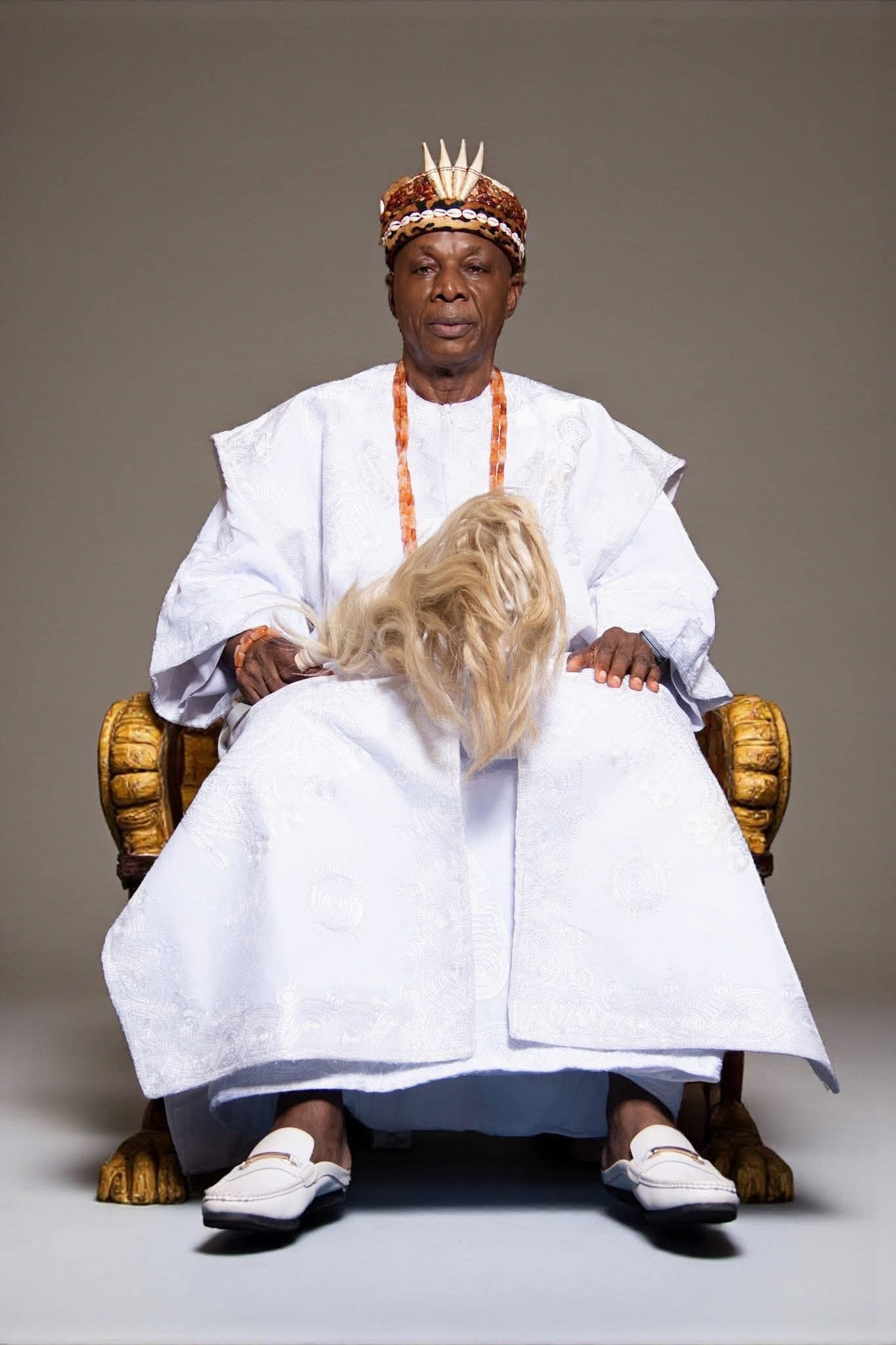
Picture: His Majesty Eze Chukwumeka Eri
By Titus Eleweke
The Golden Jubilee of His Royal Majesty, Eze Chukwuemeka Eri, on the ancestral throne of the Eri Kingdom has renewed concerns over the declining use of the Igbo language and the need to preserve the cultural heritage of Ndigbo.
The monarch, known as Eze Digboo, Ezeora 34th and Aka Ji Ovo Igbo, celebrated 50 years on the throne at the historic Obu-Gad Palace, Enugwu Aguleri, the ancestral seat of the Eri Kingdom.
The celebration attracted sons and daughters of Eri from across Igboland and beyond, with prayers offered for the monarch’s continued good health, wisdom and longevity.
The event also featured prayers in honour of the ancestors, highlighting the historical connections and cultural heritage shared by Eri descendants and related ancestral communities.
Beyond the festivities, however, the celebration became an occasion for renewed calls to rescue the Igbo language from the threat of extinction.
EJIOFOR WARNS OF IMPENDING LANGUAGE EXTINCTION
An Anambra-born human rights lawyer and lead counsel to the Indigenous People of Biafra (IPOB), Sir Ifeanyi Ejiofor, Esq. (KSC), Dunu-Ezeugosinachi, warned that the declining use of Igbo could threaten the cultural identity and heritage of future generations.
In his Monday Musings titled, “50 Years on the Throne of Eze Chukwuemeka Eri: A Golden Jubilee of Ancestral Heritage, and the 2026 World Eri Festival, Time to Confront the Impending Extinction of the Igbo Language!”, Ejiofor described the situation as requiring urgent collective action.
He noted that research had identified the declining transmission of Igbo to younger generations, particularly within families, as a major challenge to its survival.
Ejiofor also recalled a recent political campaign in which a South-East governor reportedly addressed an overwhelmingly Igbo-speaking audience entirely in English.
He questioned the growing disconnect between political leaders and their indigenous-language-speaking constituents, stressing that the issue was not opposition to English but the preservation of cultural identity.
According to him, political leaders in parts of Northern Nigeria frequently communicate with their audiences in Hausa, demonstrating the importance of indigenous languages in public engagement.
‘LET US SPEAK IGBO TO OUR CHILDREN’
Ejiofor challenged Ndigbo to reconsider their cultural priorities, asking how they could continue celebrating their ancestry and traditional institutions while allowing their language to decline.
He recalled the Igbo proverb: Onye chefuo ebe o si, amaghi ebe o na-aga — whoever forgets where they come from may lose direction about where they are going.
He called on traditional rulers, political leaders, religious institutions, schools and parents to promote the use of Igbo in homes, educational institutions and public functions.
He also urged efforts to make the language relevant to contemporary education, science, technology, governance and commerce.
Ejiofor said the 2026 World Eri Festival should inspire a lasting commitment to preserving Igbo identity rather than being limited to cultural celebrations.
He warned that losing the language would mean losing an important channel through which Igbo history, values and traditions are transmitted across generations.
“Let us not wait until the language is lost before we begin to mourn its disappearance. The time to rescue Igbo is NOW!” he declared.
Tags: Eri Kingdom, Igbo Language, Eze Chukwuemeka Eri


