
By David Onwuchekwa
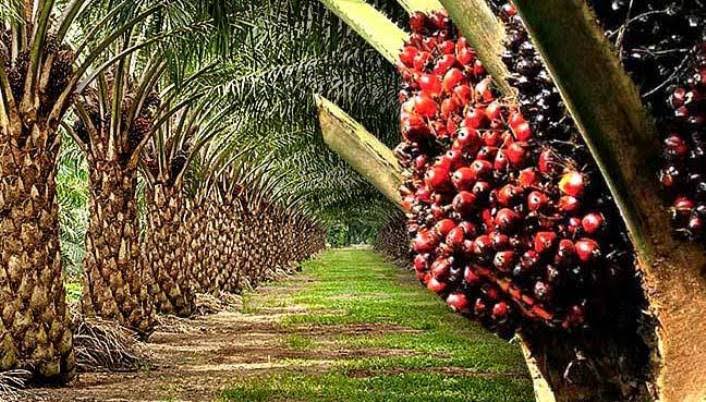
The revival of Enugu State’s abandoned palm plantations and the commencement of commercial palm oil production by Enugu United Palm Products Limited (UPPL) should serve as a wake-up call to the entire South-East.
For decades, the South-East was one of Nigeria’s major centres of palm oil production. Palm trees were not merely agricultural crops in the region; they were a major source of household income, employment, industrial raw materials and export earnings.
The oil palm economy contributed significantly to the prosperity of many communities before the fortunes of the sector declined.
Today, however, the story is different. Many once-thriving plantations have become overgrown, neglected or converted to other uses, while the region increasingly depends on palm oil produced elsewhere despite having the land, climate, human resources and historical knowledge required to remain a major producer.
This is why what is happening in Enugu deserves more than passing attention.
The Enugu State Government, through its partnership with Pragmatic Palms Limited, has demonstrated that dormant agricultural assets can be brought back to life when government provides the right policy environment and private investors bring capital, expertise and commercial discipline.
According to the company, plantations at Ibite-Olo, Umulokpa and Ugwu-Oba have been restored to productive use, with more than 1,000 hectares already replanted. The company has also installed mills and commenced commercial production of palm oil under the EVOP brand, with plans to invest about $2.2 million in a refinery and new industrial complex.
The planned refinery will produce olein, stearin and palm kernel oil, while sachet palm oil is also expected to enter the market.
This is the direction the South-East should be looking.
The lesson is simple: the future of palm oil in the region cannot depend on planting trees alone. It must be built around an integrated value chain, from nurseries and plantations to harvesting, milling, refining, packaging, marketing and export.
The other four states must act
While Enugu deserves commendation for taking this initiative, the responsibility of rebuilding the South-East’s palm oil economy cannot be left to one state.
Anambra, Imo, Abia and Ebonyi states must borrow a leaf from Enugu.
Each of these states has enormous agricultural potential. What is required is deliberate policy, identification of abandoned government plantations and agricultural estates, partnerships with credible private investors, access roads, security, modern processing facilities and incentives that will encourage farmers and investors to return to the sector.
Anambra, for instance, has a long history of commercial agriculture and a strong tradition of private enterprise. Rather than allowing valuable agricultural land to remain underutilised, the state can identify suitable areas for large-scale oil palm development and establish partnerships capable of attracting serious investment.
Imo and Abia also have vast opportunities for reviving oil palm production, while Ebonyi, already recognised for its agricultural strength, can expand its participation in the palm oil value chain.
The states do not necessarily have to establish government-owned companies. The Enugu model demonstrates the potential of public-private partnerships, where government provides the assets, policy support and enabling environment while competent private operators bring investment and commercial expertise.
From palm nuts to prosperity
The real opportunity goes beyond palm oil. A properly developed palm oil industry creates businesses around virtually every component of the crop.
Palm kernels can be processed into kernel oil; palm waste can support other industries; refined products can serve food and manufacturing companies; packaging creates additional businesses; transportation and logistics generate jobs; while large plantations create opportunities for farmers, engineers, technicians, marketers and other professionals.
In other words, palm oil can become an industrial development strategy for the South-East.
The region does not have to continue watching other parts of Nigeria expand their agricultural industries while its own agricultural assets deteriorate.
There is also an urgent need for the South-East to think beyond domestic consumption.
Nigeria has a huge domestic market for vegetable oil and related products, but a revitalised South-East palm oil industry should ultimately target regional and international markets.
With proper standards, traceability, modern processing and competitive pricing, products from the region can compete beyond Nigeria.
Government must provide the environment
The private sector cannot do everything alone. State governments must address the problems that have historically discouraged agricultural investment, including insecurity, poor rural roads, unclear land ownership, bureaucratic bottlenecks and inadequate power supply.
The Enugu example is instructive here.
Governor Peter Mbah has promised road projects to improve access to the plantations, stronger security through the deployment of Forest Guards and continued government support for the UPPL partnership.
He has also committed to making available the 6,700 hectares covered by the partnership, with discussions around expanding the project to 10,000 hectares.
Such commitments are important because agricultural investments cannot thrive when investors cannot access their farms, move harvested produce or protect their assets.
A regional agricultural revolution
The South-East needs to begin thinking of agriculture not as subsistence farming but as serious business.
Oil palm offers one of the best opportunities to make that transition.
The region has the population, entrepreneurial culture, universities, technical manpower and domestic market to build a formidable agro-industrial economy.
What is missing is the scale of investment and the coordinated political will to turn those advantages into productive assets.
Enugu has shown that abandoned plantations do not have to remain symbols of a forgotten past.
They can become engines of a new economy.
The other four South-Eastern states should therefore study the Enugu experience, identify their dormant agricultural assets and begin discussions with credible investors immediately.
The South-East once helped establish Nigeria as a major palm oil producer. There is no reason the region cannot reclaim that position.
If Enugu can revive its forgotten plantations, the other South-Eastern states should not wait until another generation asks why the region abandoned one of its greatest economic inheritances.
The time has come for the South-East to return to the palm—not merely as a symbol of its agricultural past, but as a foundation for its industrial and economic future.
Tags: #South East #Palm Oil #Enugu #Agriculture #Agro Industry #Nigeria
David Onwuchekwa is a practicing Journalist and Media Relations Consultant based in Nnewi, Anambra State


