

By Kenechukwu Ofomah
Awka
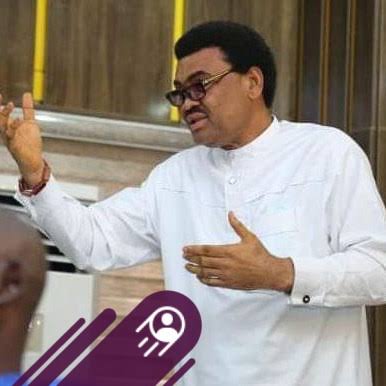
A citizens’ advocate and President of the International Peace and Civic Responsibility Centre (IPCRC), Prince Chris Azor, has called for Nigeria’s fiscal accountability framework to move beyond government disclosures to independent verification of public finance claims.
Azor made the call in a public statement on Wednesday, reacting to a Business a.m. article, “The Reform Numbers: Following the Money,” published between August 24 and 30, 2026.
He questioned claims that ₦15.8 trillion was saved from fuel subsidy removal and subsequently shared among the three tiers of government, saying such figures required independent verification.
“How much revenue did subsidy removal actually generate? How much did the Nigerian National Petroleum Company Limited (NNPCL) remit? How much did it retain, and have the obligations cited to justify retained revenues been independently audited?” he asked.
Azor also expressed concern about local government finances, arguing that increased allocations would have limited impact if councils could not independently control or account for the funds.
He urged greater transparency in public procurement, saying citizens should be able to verify whether contracts were properly appropriated, lawfully awarded, funded and executed.
The IPCRC president advocated an accountability chain covering appropriation, procurement, approvals, contract awards, payments, implementation and final project verification.
He also called for governments to publish details of infrastructure projects, including locations, contractors, contract values, payments, completion timelines and physical progress.
Azor urged civil society organisations to intensify scrutiny of public finances at state and local government levels through the Freedom of Information Act, audit reports, procurement records and other civic monitoring tools.
He said the success of Nigeria’s reforms should be measured not by the size of figures announced by officials, but by whether citizens can trace public spending to tangible improvements in their communities.
Tags: Nigeria, Fiscal Reform, Accountability, Chris Azor, Public Finance


