US President Vows More Military Action
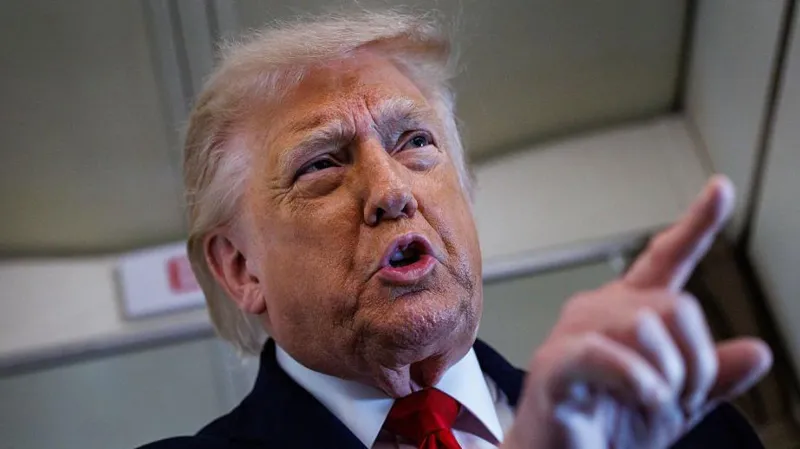
United States President Donald Trump has warned that American forces will launch fresh attacks on Iran on Wednesday, declaring that the US would hit the country “hard again” following an exchange of strikes between both nations overnight.
Speaking to reporters in the Oval Office, Trump said the US had already struck Iranian targets on Tuesday and would continue its military campaign, while again urging Tehran to sign a deal with Washington.
Iran Accuses US of Undermining Diplomacy
Iran reacted angrily to the latest threats, with Foreign Ministry spokesman Esmaeil Baqai accusing Washington of sabotaging diplomatic efforts through what he described as contradictory messages and repeated violations of a ceasefire agreement.
According to Baqai, Iran is reassessing its position, insisting that meaningful negotiations require stability and trust.
Retaliatory Strikes After US Attack
The latest escalation followed US strikes on Iranian military infrastructure near the Strait of Hormuz on Tuesday.
The attacks reportedly targeted air defence systems, radar installations and command facilities.
Iran’s Islamic Revolutionary Guard Corps (IRGC) said it retaliated by launching missiles and drones against US military bases in Bahrain and Jordan. Kuwaiti authorities also reported intercepting projectiles headed toward their territory.
US officials, however, said most of the Iranian missiles and drones were intercepted and that no casualties had been reported.
Commercial Shipping Caught in Conflict
The crisis also spilled into regional shipping lanes after a commercial vessel, the Settebello, came under attack near Oman.
India said three of its nationals working as sailors aboard the vessel were missing, while 21 crew members were rescued.
New Delhi condemned attacks on commercial shipping and civilian infrastructure, calling for an immediate end to such actions.
The US military said it targeted the tanker after alleging that it violated an American blockade on Iranian oil exports by attempting to transport crude from Iran.
Dispute Over Helicopter Incident
Tuesday’s US strikes were presented by Washington as retaliation for the downing of a US military helicopter near the Strait of Hormuz.
Trump claimed the aircraft was struck by an Iranian drone while on patrol. Both crew members survived and were rescued.
Iran, however, has not officially accepted responsibility for bringing down the helicopter.
Nuclear Programme Remains Major Flashpoint
The military confrontation comes amid renewed international pressure on Iran’s nuclear programme.
The International Atomic Energy Agency (IAEA) approved a US-backed resolution demanding greater transparency from Tehran regarding its uranium stockpiles and production facilities.
Iran condemned the move, accusing Washington of pushing confrontation while claiming to support diplomacy.
The US and Israel have long argued that Iran is seeking nuclear weapons, an allegation Tehran continues to deny, insisting its nuclear activities are solely for peaceful purposes.
Conflict Shows No Sign of Ending
The current conflict began in February after joint US-Israeli strikes on Iran killed the country’s supreme leader.
Despite a ceasefire agreement reached in April, intermittent clashes have continued, while diplomatic talks aimed at securing a lasting peace have repeatedly stalled.
Trump’s latest threat of additional strikes suggests the fragile ceasefire may be on the verge of collapse, raising fears of a wider regional conflict across the Middle East.
Tags: Iran, United States, Donald Trump, Middle East Crisis, Strait of Hormuz, Iran Nuclear Programme, US Military, Israel, Gulf Security, IAEA.