By Ebuka Onyekwelu, Ph.D
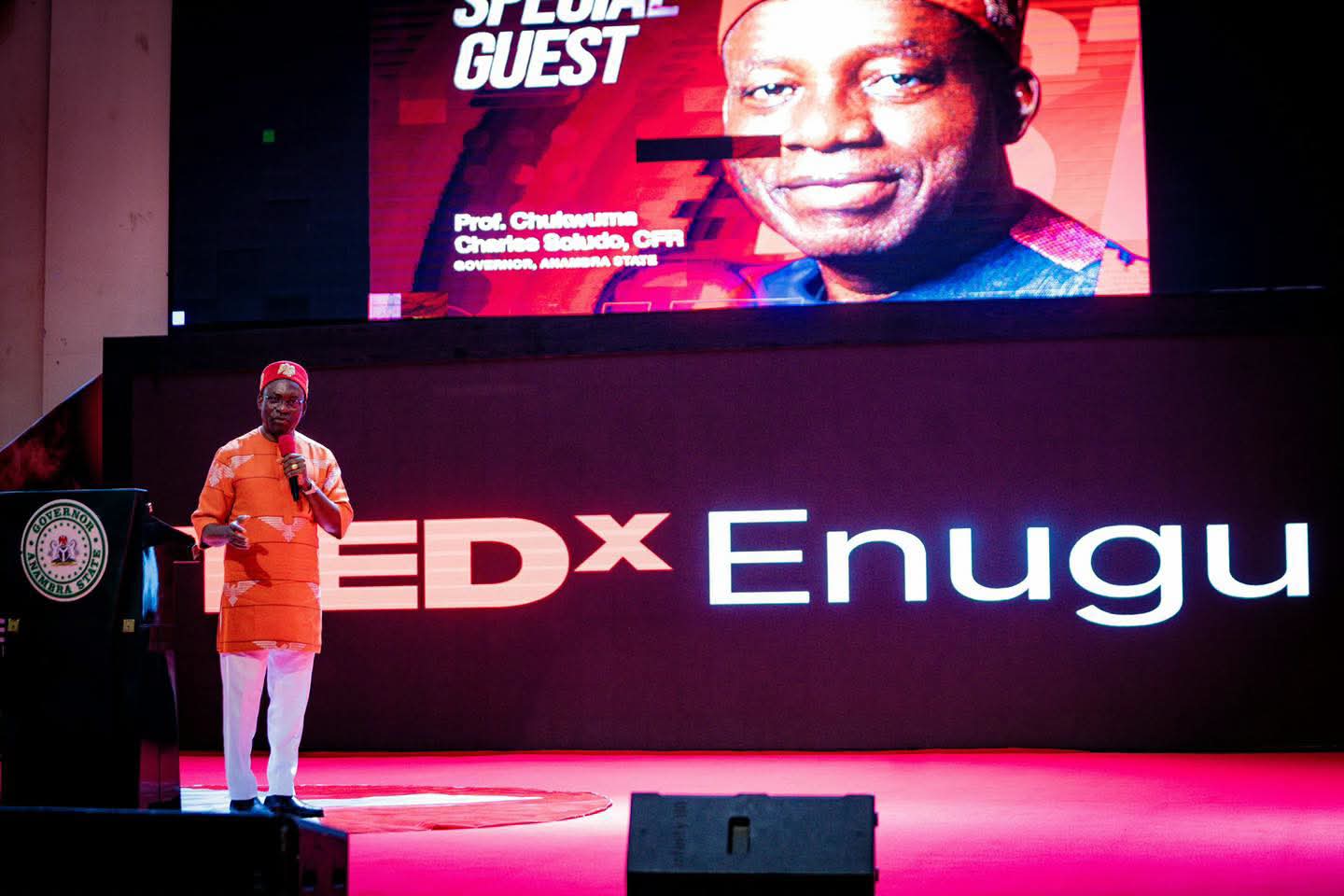
Governor Chukwuma Soludo’s recent appearance at TEDx Enugu offered an important message to Ndigbo: “Let’s tone down the noise.” It was a simple but powerful admonition that many people may have overlooked amid the broader conversations surrounding the governor’s outing. Yet, it remains one of the most significant takeaways from his address.
Viewed through the prism of partisan politics, the essence of Soludo’s message could easily be lost. But beyond political interpretations, his words represent a home truth that Ndigbo must confront and take to heart.
The truth, however uncomfortable, is that not everyone is willing to hear it, even when they demand honesty. Soludo’s message is precisely the kind of candid counsel that Ndigbo need to embrace at this critical moment in their history.
More than four decades ago, the legendary Nigerian writer, Professor Chinua Achebe, offered a similar warning to Ndigbo in his 1983 book, The Trouble with Nigeria.
While acknowledging that success could attract envy, Achebe cautioned against allowing success to “obsess the mind…and dispose it to all kinds of crude showiness.”
Apparently convinced that the point required further emphasis, he wrote: “There is no doubt that there is a strand in contemporary Igbo behavior which can offend by its noisy exhibitionism and disregard for humility and quietness.”
Sadly, Achebe’s observation appears remarkably relevant to the brazen exhibitionism displayed by some Ndigbo who have made it in life, to borrow his expression.
That a behavioural concern identified by Achebe more than 40 years ago still demands attention today is troubling. It raises fundamental questions about the values, priorities and collective aspirations of the Southeast.
Yet, this subject rarely occupies the centre of honest conversations within the region. Political correctness, fear of misinterpretation and the sensitivity surrounding Igbo identity have combined to make it an uncomfortable topic.
Fortunately, Soludo is not exactly the politician most inclined to sacrifice an honest conversation on the altar of political correctness. His intervention has therefore provided another opportunity to confront an issue that has persisted for far too long.
Beyond Marginalisation: The Home Truth Ndigbo Must Confront
For years, several difficult questions about the Southeast have either been avoided, downplayed or blamed entirely on Nigeria.
Many politicians in the region have perfected the art of navigating around conversations that demand introspection, accountability and a sense of collective responsibility from Ndigbo.
Instead, public discourse frequently revolves around marginalisation, ethnic politics and the perceived structural disadvantages confronting the Igbo within the Nigerian state.
These are legitimate concerns that deserve serious examination. Nobody should dismiss the historical and contemporary challenges facing Ndigbo in Nigeria.
But an important question remains: Why is it so difficult to speak openly about the needless noise and conspicuous exhibitionism that sometimes accompany individual success among some Igbo people?
Why must expressions such as “money na water” continue to be associated with Ndigbo in 2026?
In a world shaped by cultural differences, competing interests and unequal perceptions, can such displays of wealth and ostentatious living really be without consequences?
The issue is not whether Ndigbo should celebrate success. They certainly should. Their entrepreneurial achievements, commercial enterprise, resilience and capacity to thrive in challenging circumstances are worthy of recognition.
The problem arises when success becomes an excuse for excessive display, when wealth is measured by the noise it generates, and when personal achievement takes precedence over the collective good.
This is why Soludo’s call for Ndigbo to tone down the noise is arguably more urgent today than when Achebe raised a similar concern 43 years ago.
From Individual Wealth to Collective Greatness
At the heart of Soludo’s message is a call for Ndigbo to move beyond individual accomplishments and deliberately invest in structured, sustainable and community-based success.
The distinction is important.
Ndigbo have demonstrated remarkable capacity to build businesses, accumulate wealth and establish themselves across Nigeria and the world. However, the question is whether these individual achievements are translating into equally impressive collective institutions, enduring community development and coordinated regional progress.
Soludo’s message suggests that there is more to be done for Ala Igbo beyond individual prosperity.
The challenge is to transform personal success into a collective legacy through stronger institutions, strategic partnerships, sustainable investments and a shared commitment to the development of the Southeast.
Such a transformation requires a different mindset. It demands humility, discipline, collaboration and a willingness to subordinate personal recognition to a greater purpose.
Indeed, enduring collective achievements rarely depend on noise or self-promotion. They are built through consistent effort, strategic thinking, institutional development and the willingness to work towards goals that may not yield immediate personal recognition.
To engage in an honest conversation about the future of Ndigbo while ignoring these crucial considerations would amount to little more than rehearsed rhetoric designed to make people feel good about themselves.
An honest conversation must recognise both the external challenges confronting the Igbo and the internal attitudes and behaviours that may undermine their collective progress.
Neither dimension should be sacrificed for political convenience.
Ndigbo Must Learn to Build Without the Noise
Soludo’s message carries significant implications for the aspirations of Ndigbo in Nigeria and across the world.
If Ndigbo intend to strengthen their influence within Nigeria and establish a more formidable presence globally, they must recognise that strategic thinking is often more valuable than boastfulness.
They must learn to build alliances, deepen cooperation and pursue common interests without unnecessarily advertising every achievement or turning personal prosperity into a public spectacle.
No civilisation can endure on the strength of individuals alone. It requires institutions, shared values, collective discipline and a commitment to preserving achievements beyond the lifetime of their founders.
For Ndigbo, this means recognising that personal wealth, however impressive, cannot substitute for strong communal institutions, coordinated economic interests and a clearly defined collective vision.
It also means accepting responsibility for individual and group behaviours that expose the community to needless scrutiny, resentment or hostility, while taking deliberate steps to manage their consequences.
This is not a call for Ndigbo to hide their success or apologise for their achievements. Rather, it is an appeal for greater wisdom in how success is expressed, deployed and converted into lasting benefits for the wider community.
Achebe raised the alarm more than four decades ago. Soludo has now brought the conversation back into the public space.
The question is whether Ndigbo are prepared to move beyond admiring the wisdom of these observations and begin to act on them.
Ultimately, the greatness of Ndigbo will not be determined solely by how much wealth individuals accumulate or how loudly they announce their accomplishments. It will also depend on what they build together, the institutions they leave behind and the collective respect they command.
The message is clear: Ndigbo have proved that they can succeed individually. The next challenge is to turn that success into enduring collective greatness—and to understand that sometimes, the most powerful progress is made without the noise.
Tags: #Soludo #Ndigbo #ChinuaAchebe #AlaIgbo