From The Nijasun Feature Desk
Anambra State is sitting on enormous natural gas reserves that could power its industries, generate electricity, create jobs and accelerate its transformation into a modern industrial hub. Yet, despite its status as an oil-producing state, the resources that could change its economic fortunes remain largely beyond its reach.
This troubling contradiction came into sharp focus when the Anambra State Commissioner for Information and Value Reformation, Dr. Law Mefor, called for the state’s inclusion in Nigeria’s gas development framework, insisting that the state cannot achieve its industrialisation ambitions without direct access to the gas beneath its soil.
For a state seeking to become a smart mega city and a preferred destination for investment, living, working and relaxation, the challenge is clear: Anambra cannot fully unlock its economic potential if the energy required to power its industries remains inaccessible.
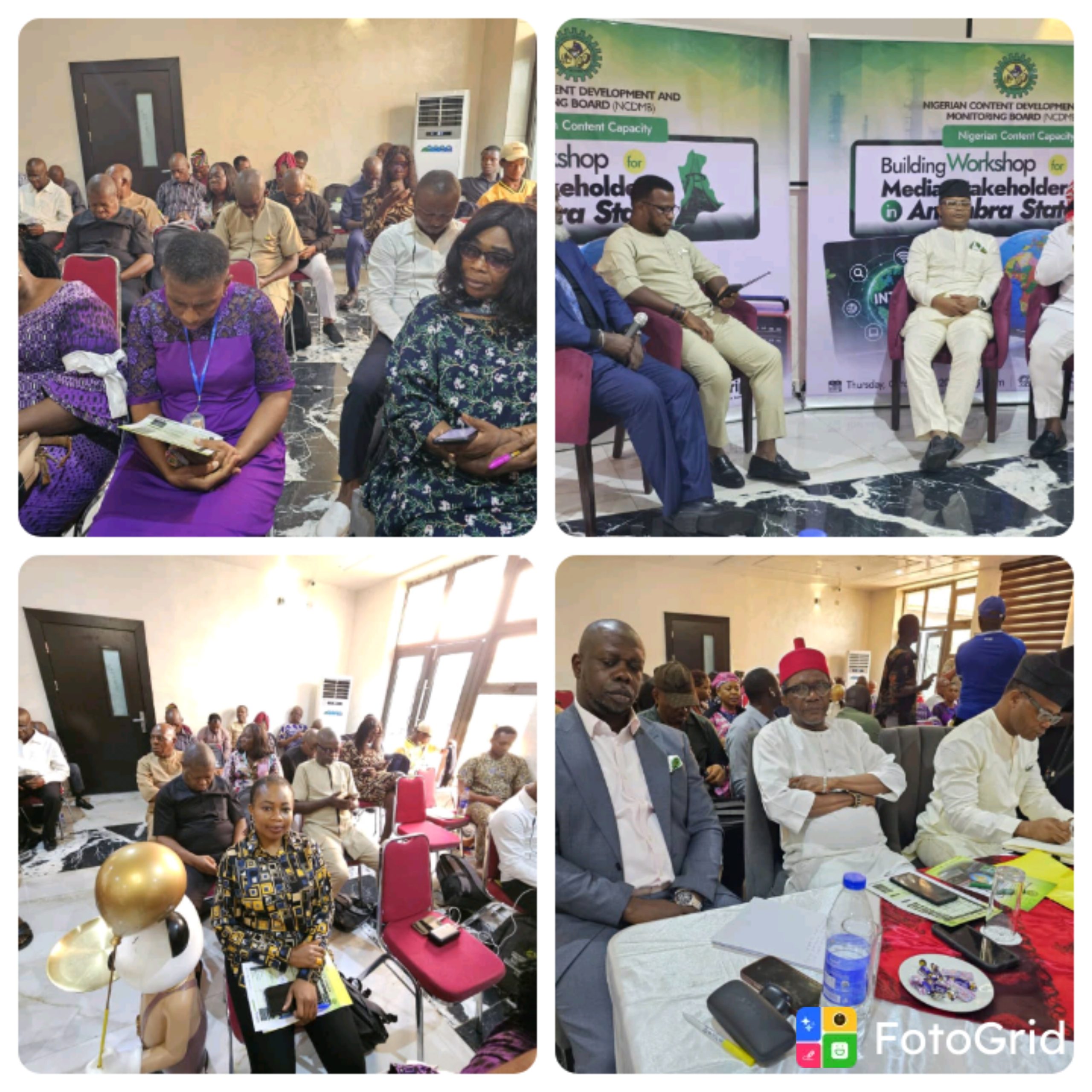
Mefor made the case while delivering a goodwill message at the Nigerian Content Capacity Building Workshop for Media Stakeholders in Anambra State, organised by the Nigerian Content Development and Monitoring Board (NCDMB) in Awka.
Representing the state government, the commissioner thanked the board for bringing the workshop to Anambra but challenged stakeholders to look beyond capacity building and confront the practical barriers preventing the state from benefiting fully from its oil and gas resources.
He promised to escalate the issues raised to Governor Charles Soludo, signalling the state government’s determination to pursue the matter.
The Gas Paradox: Oil-Producing State, Untapped Potential
At the heart of Mefor’s intervention is what he considers an unacceptable contradiction: Anambra possesses substantial gas resources but has yet to enjoy the level of economic transformation that access to those resources could facilitate.
He lamented that despite sitting on one of the significant gas reserves in Nigeria and Africa, the state had not felt the expected impact of the country’s Gas Master Plan.
According to him, Anambra’s exclusion from the national gas development framework has become a major obstacle to its industrial and energy ambitions.
The implication extends beyond the gas industry. Reliable and affordable energy is fundamental to industrial production, commercial activities, job creation and economic competitiveness.
For businesses operating in Anambra, access to gas could provide an opportunity to explore more dependable energy sources, reduce their reliance on costly alternatives and improve their capacity to compete.
It could also create opportunities for investments in gas processing, distribution, power generation and related services, with benefits extending to small businesses, skilled workers and local communities.
Mefor’s argument, therefore, goes beyond the state’s entitlement to a natural resource. It raises a fundamental development question: How can a state accelerate industrialisation when a resource capable of powering that transformation remains outside its effective reach?
Electricity Law Opens a New Window for Anambra
The commissioner’s demand comes against the backdrop of constitutional and legislative changes that have expanded the opportunities available to states to develop their electricity markets.
Mefor pointed to President Bola Ahmed Tinubu’s assent to legislation that moved electricity generation, transmission and distribution from the exclusive to the concurrent legislative list, opening greater opportunities for subnational governments to participate in electricity development.
He noted that Anambra had established an Electricity Board and possessed the institutional framework to pursue its power ambitions.
However, he stressed that the ability to generate electricity would mean little without access to the resources needed to sustain production.
For Anambra, gas represents a potentially critical link between its electricity ambitions and its industrial development agenda.
With dependable gas supplies, the state could explore gas-fired power generation to support industrial clusters, commercial centres and other productive activities.
The possibility of generating electricity beyond local requirements and selling the surplus to other states could also open another revenue stream, provided the necessary infrastructure, regulatory approvals and commercial arrangements are put in place.
Such a development would require substantial investment in gas supply infrastructure, power plants and electricity distribution networks.
Nevertheless, Mefor’s position highlights the importance of integrating gas development with the state’s electricity plans.
The challenge is not simply to possess gas or establish institutions for electricity generation. It is to connect the two in a way that delivers measurable economic benefits.
Soludo’s Smart Mega City Ambition Needs Energy
The gas question also touches the broader development vision of the Soludo administration.
Mefor said the state government remained committed to transforming Anambra into a smart mega city and a destination of choice for people to live, work, invest and relax.
The administration’s development vision places considerable emphasis on private-sector participation, making infrastructure and energy critical to its success.
Investors considering manufacturing, processing, technology, logistics and other industrial ventures must assess the availability and cost of electricity before committing substantial resources.
Where energy supply is unreliable or expensive, businesses face higher operating costs, reduced productivity and limited opportunities for expansion.
Consequently, improved access to gas and the development of a more dependable electricity market could strengthen Anambra’s investment appeal.
For the state’s manufacturing and commercial centres, the benefits could extend to increased production, improved competitiveness and new employment opportunities.
Yet, achieving these outcomes will require more than declarations of intent. It will demand sustained engagement between the state government, federal agencies, gas producers, investors and other stakeholders to address the regulatory, infrastructure and commercial challenges surrounding gas development.
Mefor’s appeal to the NCDMB therefore presents an opportunity to place Anambra’s energy needs more firmly within the national conversation on local content and resource development.
NCDMB and the Local Content Opportunity
While the workshop focused on building the capacity of journalists to report Nigerian Content issues more effectively, Mefor’s intervention broadened the conversation to the economic opportunities that local content policies should help unlock.
The NCDMB was established following the enactment of the Nigerian Oil and Gas Industry Content Development Act in 2010.
The law provides a framework for increasing Nigerian participation in the oil and gas industry, strengthening indigenous businesses, developing local technical capacity and retaining greater economic value within the country.
For Anambra, the implications are significant.
The state is home to prominent entrepreneurs and companies operating in the oil and gas sector, including Engineer Emeka Okwuosa of Oilserv and Dr. Ernest Nnaemeka Azudialu-Obiejesi, founder of the Nestoil Group.
Their presence demonstrates the capacity of Anambra-linked businesses and entrepreneurs to participate in a sector that demands substantial technical expertise, investment and specialised services.
However, the wider opportunity lies in ensuring that more businesses, professionals, artisans and young people from the state can participate in the industry’s value chain.
The NCDMB’s engagement with journalists could help bridge the information gap by publicising opportunities, explaining regulatory requirements and highlighting the skills and services needed by industry operators.
Equally important is the need for public institutions to ensure that local content translates into tangible benefits for communities and businesses across oil-producing areas.
For Anambra, this means linking its gas resources, indigenous business capacity, electricity ambitions and human capital development into a coherent economic strategy.
Why the Media Must Look Beyond the Headlines
Speaking at the workshop, the General Manager, Corporate Communication of NCDMB, Dr. Obinna Ezeobi, said the board wanted to establish a stronger platform in the South-East and collaborate with the media beyond the workshop to improve the quality of Nigerian Content reportage.
His remarks underscored the importance of sustained engagement between the board and journalists in a region whose economic potential deserves greater attention in discussions about the oil and gas industry.
The workshop was designed to deepen journalists’ understanding of the NCDMB’s mandate, programmes and achievements while strengthening their ability to report technical issues affecting the sector.
The board’s position is that effective communication and stakeholder engagement are essential to the implementation of Nigerian Content policies.
Indeed, journalists have a crucial role to play in examining whether the promises associated with oil and gas development translate into opportunities for local businesses, employment for qualified Nigerians and improved living conditions in host communities.
In Anambra’s case, that responsibility extends to asking difficult questions about the relationship between its gas reserves and its economic development.
Why has the state not benefited more visibly from its gas resources? What practical steps are required to improve access? Which federal institutions and private-sector operators must be involved? What infrastructure and investment will be needed? And how can the public track progress towards resolving the problem?
These are the questions that can move the conversation from general expressions of concern to concrete policy commitments.
By reporting the issues with depth, accuracy and context, the media can help citizens understand the opportunities at stake while holding public institutions and industry operators accountable for their responsibilities.
Education Must Produce Creators, Not Just Job Seekers
Beyond the immediate question of gas access, Mefor also called for a review of Nigeria’s educational system to align it with the changing demands of the future workplace.
He argued that the country needs graduates equipped to create businesses, generate employment and contribute directly to production rather than depend exclusively on existing employment opportunities.
The argument is particularly relevant to the oil and gas industry, where technical competence, specialised training and professional certification can determine who gains access to available opportunities.
For the NCDMB, the challenge is to ensure that its training and capacity-building programmes produce skilled manpower capable of meeting industry’s needs.
For educational institutions, it means strengthening the connection between classroom learning and practical industrial requirements.
And for young people in Anambra, it means recognising that the opportunities associated with gas development will require relevant skills, entrepreneurship and a willingness to participate in productive sectors of the economy.
If properly harnessed, the combination of natural resources, indigenous enterprise, technical education and reliable electricity could provide a foundation for a more productive economy.
But without deliberate planning, even abundant resources may fail to produce the jobs and prosperity expected by the people.
From Natural Resources to Real Prosperity
Ultimately, the issues raised at the Awka workshop point to a wider question about Nigeria’s approach to natural resource development.
The existence of oil and gas reserves does not automatically translate into industrial growth. Resources must be accessible, infrastructure must be available, investment must be mobilised and local businesses must possess the capacity to participate.
For Anambra, access to gas could help strengthen its electricity ambitions and support the transformation envisioned by the Soludo administration.
The NCDMB, meanwhile, has an opportunity to deepen its engagement with the South-East by improving awareness of local content opportunities and strengthening collaboration with businesses, professionals, educational institutions and the media.
The state government must also pursue the institutional and commercial arrangements necessary to turn its gas potential into a practical development advantage.
Mefor’s intervention has brought the issue into sharper focus. The next step is to move from concern to coordinated action.
Anambra’s gas reserves should not remain merely a statistic in discussions about the state’s natural wealth. Their value must ultimately be measured by the electricity they help generate, the industries they support, the businesses they empower and the jobs they create.
For a state aspiring to become a smart mega city and a major investment destination, the question is no longer simply whether it possesses the resources to drive industrialisation.
It is whether Anambra can secure the access, infrastructure and investment needed to turn those resources into the economic power its people deserve.
Tags: Anambra State, NCDMB, Nigerian Content, Gas Development, Soludo