Tension in Nnewi over alleged breach of 1997 power-sharing pact
By David Onwuchekwa, Nnewi
Tension is rising in Nnewi, Anambra State, following allegations that the town’s long-standing political zoning arrangement is being undermined in the race for the next local government chairman.
At the center of the dispute is a 1997 agreement reached by community leaders, which provides for the rotation of key political offices among the four quarters of Otolo, Uruagu, Umudim, and Nnewichi.
The pact was designed to promote equity, unity, and inclusiveness by ensuring that no single quarter dominates elective positions.
For years, stakeholders say the arrangement has guided political succession in Nnewi and helped maintain balance among the quarters.
However, recent developments surrounding the emergence of a chairmanship candidate have sparked controversy.
Some community leaders and residents allege that the current process does not reflect the agreed rotation sequence, insisting that it is Nnewichi’s turn in line with the 1997 pact.
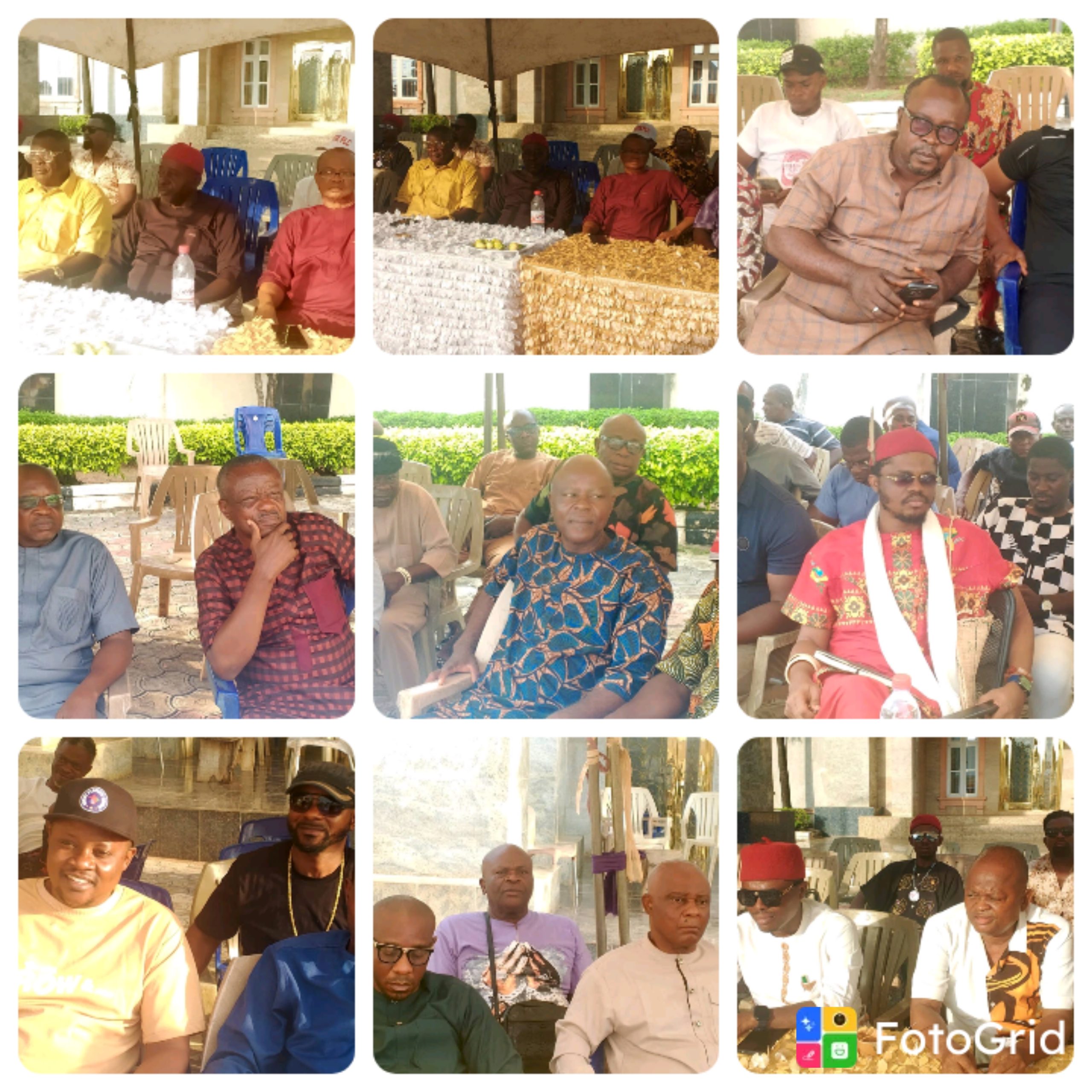
Rising from a stakeholders’ meeting held on Sunday, April 19, 2026, at the instance of Chief Gabriel Chukwuma (Gabros), participants rejected what they described as attempts to sideline the rotational agreement.
The meeting, attended by about 300 stakeholders drawn from the four quarters, warned that abandoning the arrangement could erode trust and trigger avoidable conflict in the community.
They specifically traced the alleged breach to the actions of the current council chairman and his sponsors, urging a return to the established zoning formula.
However, dissenting voices, described by the stakeholders as a minority, argue that the agreement is not legally binding and should not override prevailing political considerations such as party decisions and candidate popularity.
The disagreement has sharply divided opinion across Nnewi, with increasing calls for dialogue and a return to the principles of fairness that informed the original agreement.
Several speakers at the meeting also condemned what they termed disobedience to the Monarch of Nnewi, His Royal Highness, Igwe Dr Kenneth O. Orizu III, who had earlier declared that the rotational principle must not be tampered with.
One speaker questioned the absence of prominent industrialists such as the CEO of Innoson Group, Chief Innocent Chukwuma, and the CEO of Chicason Group, Chief Chika Okafor, among others.
Responding, Chief Chukwuma disclosed that the business leaders had expressed full support for the resolution of the crisis and had pledged to fund efforts aimed at restoring peace and stability in the community.
He also expressed concern over why Anambra State Governor, Prof. Charles Soludo, appeared to be listening to a minority position rather than aligning with the stance of the traditional ruler, Igwe Orizu III.
A member representing Nnewi North in the Anambra State House of Assembly, Hon. Augustine Ikedoji, said although he belongs to an institution, it would not stop him from speaking against what he described as wrongdoing. He, however, noted that the situation remains resolvable.
Prominent academics, including Prof. Obi Nwosu and Prof. Edwin Chukwuma, were also present and condemned any attempt to disregard the monarch’s directive and the long-standing zoning arrangement.
After extensive deliberations, the stakeholders resolved to reconvene at a later date to further address the issue.
Other speakers at the meeting included Chukwujiobi Madubuchukeu; Sir James Louis Okoye (Akacham); Chief George Nwachukwu; Chinedu Adili Ubah; Osita Nwosu; Hon. Okechukwu; and Dr. Emma Nsoedo, among others.
Tags:
Nnewi Politics, Anambra State, Power Rotation, Local Government Election, Political Crisis, Traditional Rulership, Igwe Kenneth Orizu III, Charles Soludo, APGA, Community Leadership, Governance, South East Nigeria