By Chinedum Treasure
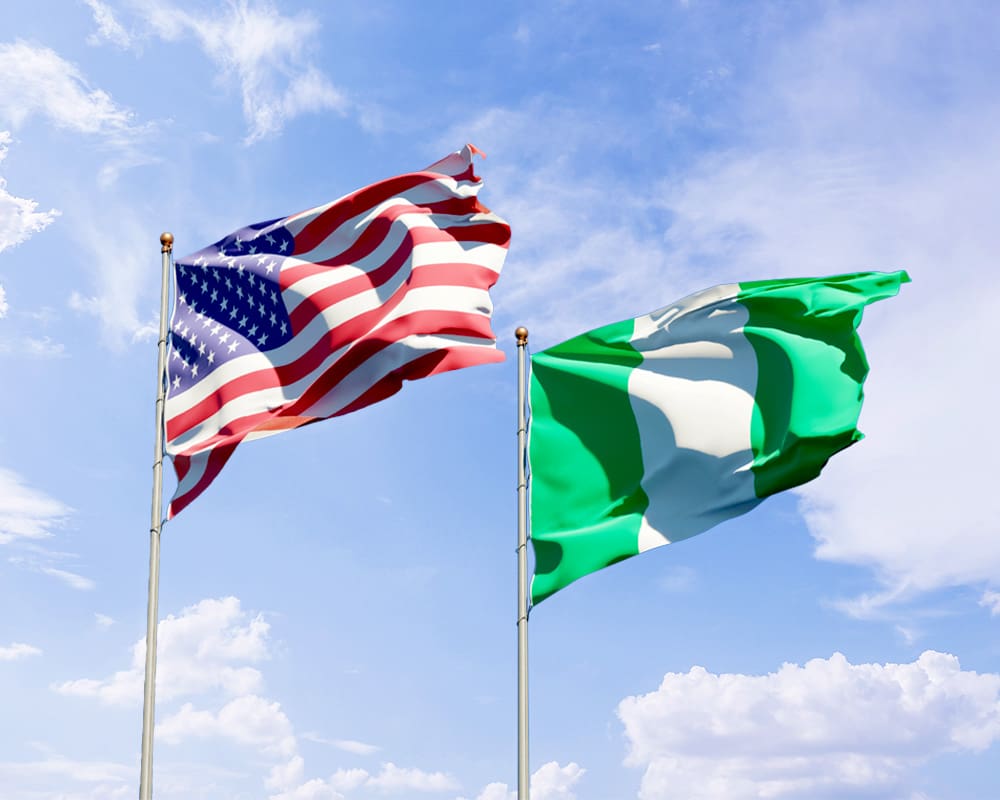
Amid protests that erupted in Northern Nigeria over the killing of Iranian Supreme Leader, Ayatollah Ali Khamenei, in a joint US-Israeli airstrike, and the subsequent attacks and counterattacks between the countries, Nigerian government has been advised to adopt rights-based early warning governance, which strengthens institutional legitimacy while the situation.
The advice came from rights activist, Okechukwu Nwanguma in reaction to the ensuing war between the nations.
There were reports of protests by members of the Islamic Movement in Nigeria (IMN), popularly known as Shi’ites, led by Ibrahim El-Zakzaky, in Gombe, Niger, Kano, Bauchi, Yobe and Sokoto states over the ensuing violence, just as the Nigeria Police Force has ordered all the Commissioners of Police in the 36 states and the Federal Capital Territory to heighten surveillance across the country.
Shiites and Iran are connected by shared faith, religious leadership, history and a common sense of global identity, with Iran acting as the symbolic and practical hub of Shi’a Islam.
Our correspondent has also observed social media posts by Nigerians, turning the war between Iran on one hand, and the US and Israel on the other hand, to a religious one, spewing contents that erupt outrage and disrespect to the sensibilities of practitioners of the Christian and Muslim faith.
Responding to the development, the rights activist observed that a major escalation between the United States, Israel and Iran would not remain confined to the Middle East, noting that in Nigeria, the consequences will travel quickly, through oil markets, digital narratives, diplomatic alignments, and domestic identity politics.
While noting that in moments of global polarization, domestic mistrust can harden into confrontation, Nwanguma insisted that the real danger is not imported proxy warfare, but internal overreaction.
“If Iran disrupts shipping through the Gulf, oil prices could spike. Nigeria may gain short-term revenue. But history shows that windfalls do not automatically translate into stability.
“Fuel import dependence, inflationary pressure, and food supply disruptions could deepen public hardship.
“Again, in crisis moments, security agencies often widen surveillance. If Shia communities are framed through a geopolitical lens rather than as Nigerian citizens with constitutional rights, this could deepen alienation, trigger protest cycles, invite international scrutiny, and undermine civic trust.
“Nigeria’s constitutional order is strongest when security and rights reinforce each other, not when one is sacrificed for the other,” he posited.
Acknowledging how rapidly narratives of martyrdom, anti-Western grievance, or sectarian polarization can spread through social media, Nwanguma warned that if authorities respond by broadly restricting speech instead of targeting incitement, they risk shrinking civic space and pushing discourse underground.
He advocated the entrenchment of a sensitivity framework in the country, not a crackdown model, establishment of a multi-agency early warning desk, refrain from collective suspicion, proactive religious engagement, protection of peaceful protest rights, and economic buffer planning, to stabilize fuel pricing mechanisms, preempt inflation spikes with targeted social protection, and communicate clearly to avoid panic buying.
Nwanguma also called for the strengthening of civil-security dialogue platforms.
He insisted that the nation must avoid mass arrests without individualized evidence, use of counterterrorism labels for political containment, militarized policing of religious events, and suppression of the media.
“History shows that securitizing identity issues breeds radicalization.
“Nigeria can respond to global shockwaves in one of two ways- fear-driven securitization, which may temporarily suppress dissent but deepen long-term instability, or rights-based early warning governance, which strengthens institutional legitimacy while managing risk.
“Security and human rights are not competing values. In fragile contexts, they are mutually reinforcing pillars of stability.
“The test is not whether Nigeria can control its citizens. It is whether it can govern with foresight, restraint, and constitutional fidelity in a volatile world,” Nwanguma maintained.