

By David Onwuchekwa
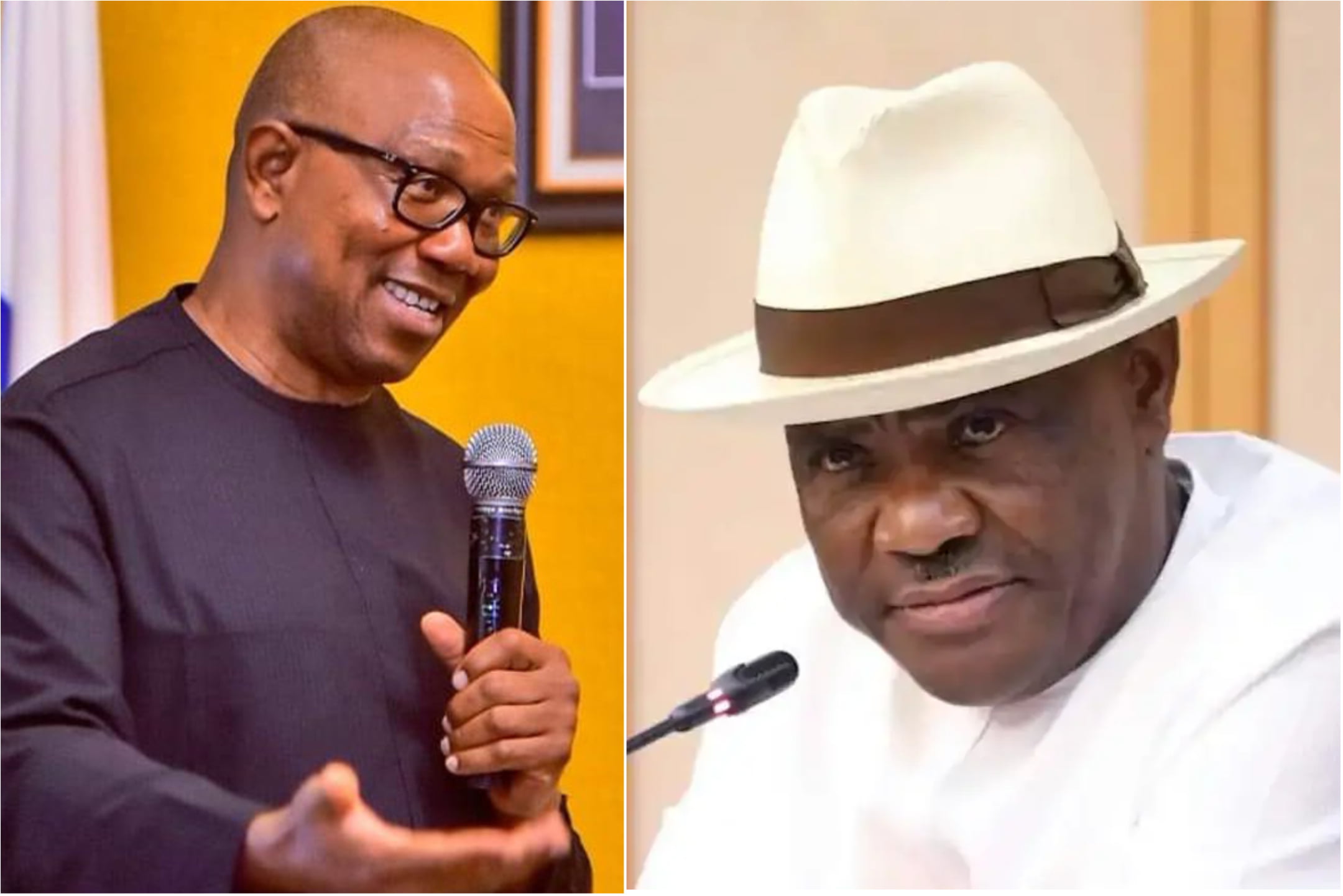
Federal Capital Territory Minister, Nyesom Wike, may have spoken confidently when he reportedly declared Peter Obi’s political movement dead and buried, but his assessment raises a fundamental question.
Is the former Anambra Governor’s political relevance determined by Wike’s personal assessment, or by the realities of Nigerian politics and the mood of the electorate?
Wike’s alleged declaration that he has killed Obi’s political wave is arguably one of the most sweeping political claims ahead of the 2027 presidential election.
But a closer examination of the 2023 election results, Nigeria’s current political environment and the emerging opposition alignment suggests that the minister may be underestimating the very political force he is attempting to dismiss.
There is a difference between a political movement losing some of its initial excitement and disappearing completely. Wike appears to be confusing the two.
The 6.1 million votes Wike cannot wish away
In the 2023 presidential election, Obi polled 6,101,533 votes, representing 25.4 per cent of the total valid votes cast, according to figures declared by the Independent National Electoral Commission.
He finished third behind Bola Tinubu and Atiku Abubakar, but his performance was remarkable considering the relatively limited political structure of the Labour Party compared with the established APC and PDP.
More significantly, Obi secured victories in 12 states, including Lagos, Abia, Anambra, Enugu, Imo, Ebonyi, Delta, Edo, Cross River, Plateau, Nasarawa and the Federal Capital Territory.
These were not imaginary votes. They represented millions of Nigerians who consciously rejected the two dominant political parties and embraced an alternative.
Even if some of those supporters have become less vocal, there is no credible electoral evidence that they have all abandoned Obi.
Wike’s question about how many people are contributing money to Obi’s political ambition also misses the larger point. Electoral support is not measured exclusively by financial contributions.
Millions of Nigerians can support a candidate without making financial donations.
The conditions that produced Obi’s popularity have not disappeared
Perhaps Wike’s greatest political miscalculation is his apparent assumption that the conditions which generated the Obi movement in 2023 have ceased to exist.
What exactly has changed in the lives of ordinary Nigerians to suggest that the frustrations which propelled the movement have disappeared?
The country continues to grapple with economic hardship, unemployment, insecurity, rising living costs and concerns about the quality of governance.
Indeed, the economic and social circumstances confronting many households remain important factors that could shape voting decisions in 2027.
Obi’s supporters did not emerge from nowhere. They were drawn from different sections of society, including young professionals, students, entrepreneurs, workers, civil servants and Nigerians frustrated with the traditional political establishment.
Some supported him because of his record in Anambra State, others because of his emphasis on prudence, accountability and production-driven economic development.
Others simply wanted a departure from the familiar political order.
Those motivations cannot be dismissed merely because the 2023 election is over.
The Obi-Kwankwaso partnership changes the political equation
Wike’s criticism becomes even more interesting when considered against the emerging political arrangement between Obi and Kwankwaso under the Nigeria Democratic Congress.
Obi brings substantial support from the South-East, parts of the South-South, the North-Central and urban centres across the country.
Kwankwaso, on the other hand, has an established political following in Kano and considerable recognition in northern political circles.
The two politicians therefore bring different political constituencies to the same ticket.
It would be simplistic to assume that Kwankwaso’s influence is restricted to Kano or that Obi’s appeal is limited to the South-East.
Their partnership offers an opportunity to construct a broader national coalition.
Of course, political popularity does not automatically translate into electoral victory. They must build structures, negotiate regional interests, mobilise voters and protect their votes.
But dismissing the partnership before the actual electoral contest is political wishful thinking.
Wike’s argument about Obi having nothing to offer requires scrutiny
Calling Obi a dramatist does not constitute a political argument.
The minister needs to explain why millions of Nigerians who supported Obi in 2023 should suddenly conclude that he has nothing to offer.
Obi’s political message has consistently centred on reducing the cost of governance, fighting corruption, investing in education and healthcare, promoting production and improving public accountability.
Whether Nigerians accept these proposals or consider them sufficient is a matter for political debate.
But a candidate’s policy positions should be examined on their merits rather than dismissed through personal attacks.
Wike is entitled to defend President Tinubu’s administration and campaign for its continuation. However, that responsibility does not confer on him the authority to determine the political relevance of opposition candidates.
If Obi has nothing to offer, the appropriate response is to challenge his proposals with superior policies and measurable achievements.
The real challenge before Obi is not Wike
To be fair, Obi’s political movement has challenges that cannot be ignored.
The movement must demonstrate that it can survive beyond social media enthusiasm and convert its popularity into a sustainable political organisation.
It must also address the consequences of political defections, party instability, regional expectations and the possibility of divisions among opposition supporters.
The Labour Party crisis and subsequent movement into the NDC have created a new political environment that requires fresh mobilisation.
The 2023 electoral experience also demonstrated that popularity alone cannot guarantee victory in Nigeria’s presidential election.
Obi and Kwankwaso must therefore develop a formidable nationwide structure, establish effective grassroots mobilisation and convince Nigerians that their proposed government has the competence to address the country’s problems.
That is the real test
But these challenges should not be confused with political extinction.
Wike should be careful about declaring victory before the contest.
There is something politically revealing about Wike’s confidence in declaring Obi’s movement dead several months before Nigerians cast their votes.
The minister appears to be measuring opposition strength by the visibility of political campaigns and the enthusiasm of supporters at particular moments.
But political movements do not always operate at the same intensity throughout an electoral cycle.
Supporters can become quiet without abandoning their political convictions. Political mobilisation can slow down and gather momentum again when an election approaches.
More importantly, the electorate is not permanently tied to any political party or candidate.
The same Nigerians who supported a candidate in 2023 can make a different choice in 2027. Equally, those who voted for Tinubu in 2023 can reconsider their positions.
That is the reality of competitive democracy.
Wike should also remember that the 2023 presidential election was not won with an overwhelming majority. Tinubu secured 8,794,726 votes, representing 36.61 per cent of valid votes cast.
The combined votes of Atiku and Obi alone exceeded Tinubu’s total.
Although opposition votes cannot automatically be transferred from one candidate to another, the figures demonstrate that the ruling party does not enjoy an unchallengeable electoral monopoly.
The electorate will decide, not Wike
Ultimately, Wike’s declaration that he has killed Obi’s political wave is a political opinion, not an established electoral fact.
The former Anambra Governor may face serious challenges in his quest for the presidency, but dismissing his political relevance ignores the millions of Nigerians who supported him in 2023 and the possibility of renewed political mobilisation.
The 2027 election will be determined by the choices Nigerians make, their assessment of the present administration, the credibility of opposition alternatives and the ability of political parties to mobilise voters.
Wike can campaign for Tinubu, defend the administration and challenge the opposition. That is his democratic right.
But he cannot kill a political movement by declaration.
If Obi has lost his political appeal, the ballot box will establish it. If the movement remains alive, the same ballot box will expose the minister’s miscalculation.
The real question is not whether Wike believes Obi’s wave is dead. It is whether Nigerians who voted for change in 2023 are satisfied with the direction of the country in 2027.
Tags: Obi, Wike, 2027, election, victory, Nigerian masses


