
By David Onwuchekwa, Nnewi
The dualization of the Agulu–Nnewi–Okija road corridor by the administration of Charles Soludo stands as one of the most visible infrastructure interventions in Anambra State in recent years.

Stretching from Agulu in Anaocha Local Government Area, passing through the bustling commercial city of Nnewi, and linking up with Okija in Ihiala Local Government Area, the project has significantly improved connectivity and mobility across these communities.
For residents, traders, transport operators and industrialists in Nnewi and its surrounding towns, the road has already begun to deliver clear economic benefits.
The improved traffic flow has reduced travel time, eased transportation of goods and services, and enhanced commercial activities within the industrial hub of Nnewi and neighbouring communities.
Without doubt, the project deserves commendation.
However, while the dualized road has opened up new opportunities for economic growth and development, it is also gradually becoming a serious safety concern due to the reckless behaviour of many road users.
Over-speeding has become a disturbing and frequent occurrence on the highway. What was designed to make transportation easier and safer is now being turned into a dangerous corridor by motorists, tricyclists and motorcyclists who flagrantly ignore basic traffic regulations.
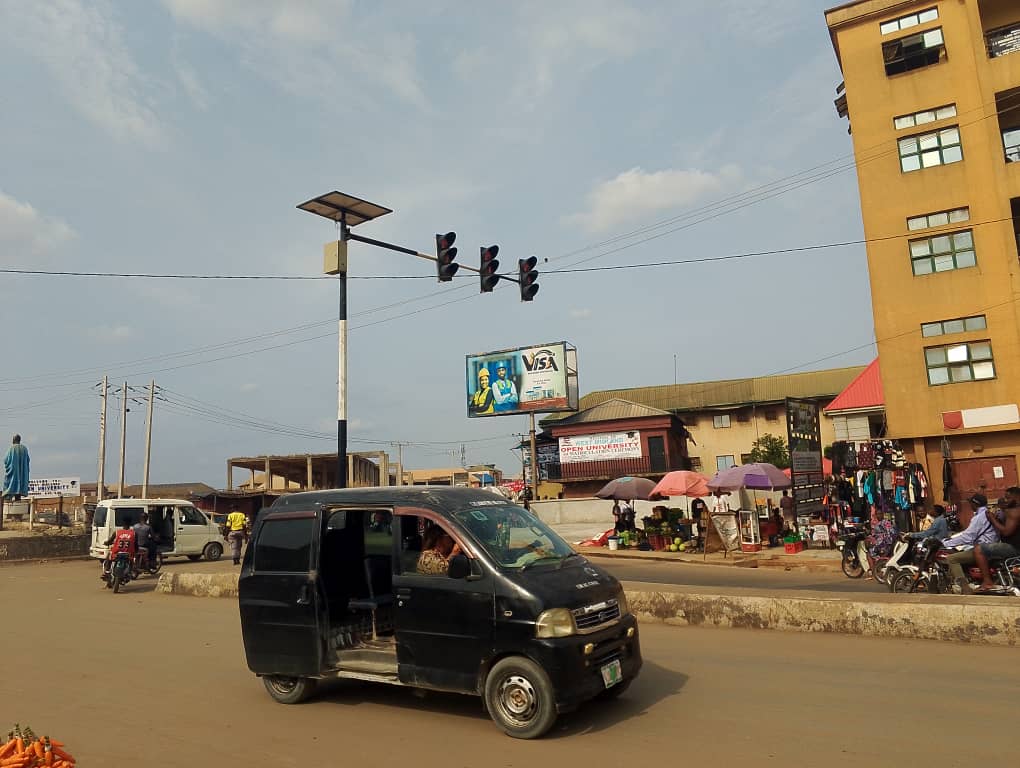
The situation is further compounded by the fact that traffic lights installed at strategic locations, particularly within Nnewi North Local Government Area, are often ignored by impatient drivers and riders.
The consequences are already visible.
Reports of road crashes along the corridor have become increasingly common. Innocent pedestrians, including school children and elderly residents, are frequently exposed to grave danger while attempting to cross the road.
For a city like Nnewi where population growth continues to increase daily due to its reputation as an industrial and commercial centre, this emerging pattern should not be taken lightly.
Infrastructure development should not come at the cost of human lives.
What is urgently required now is a coordinated response from the relevant authorities. The Anambra State Government must strengthen traffic enforcement along the corridor through the deployment of road safety officials, installation of speed control mechanisms such as speed bumps in critical areas, and strict penalties for traffic violators.
Equally important is the role of the Mayor of Nnewi North Local Government Area, whose administration must collaborate with traffic agencies to introduce effective traffic management measures.
Public awareness campaigns aimed at educating motorists, tricyclists, motorcyclists and pedestrians on road safety are also necessary to curb the growing recklessness on the road.
Development is meaningful only when it improves the quality of life and guarantees the safety of the people.
The Agulu–Nnewi–Okija dualized road should remain a symbol of progress, not a corridor of avoidable tragedies.
Now is the time for decisive action before a commendable project turns into a permanent source of grief for the people it was meant to serve.


